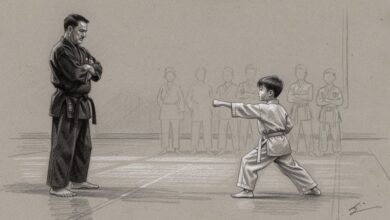

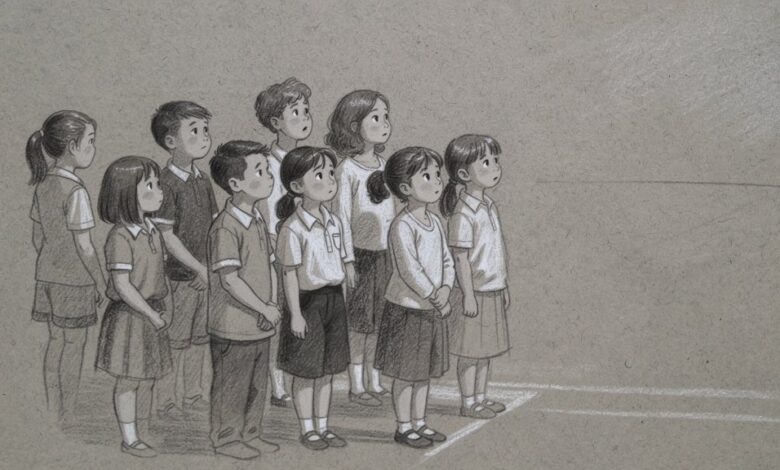
Most kids already want to stop what they’re watching and have never been told how. That’s not a character problem. It’s a curriculum gap, and it’s yours to close.
Everything in the first two articles was about the child being bullied and the adults around them. Both were written so you could print them and hand them to a family.
This one is different, because the biggest opportunity you have isn’t the target and it isn’t the child doing the bullying. It’s everybody else standing there, and they OUTNUMBER both of them by a wide margin.
Who ends up targeted
The kids who get bullied tend to be quiet, cautious and sensitive, which makes a certain sense, because the child doing the bullying is looking for a reaction. They often have lower-than-average confidence. Boys tend to be physically weaker than their peers, girls tend to mature earlier. They’re often afraid of getting hurt, and they frequently find it easier to talk to adults than to other kids.
NONE of that is destiny and none of it is a fault. It’s a profile, and I’d ask you to hold it loosely. You’ll have a confident, athletic, socially easy student who is being targeted anyway, and if you’re looking for the profile you’ll miss them.
The bully-victim is your hardest student
There’s a group in the middle that almost nobody plans for, the kids who bully others and get bullied themselves. In our data it’s around 6% of kids.
They often have trouble reading social signals, and often have reading or writing difficulties. They frequently try to bully weaker students, because those are the ones they know they can pick on. Then the other kids come after them, and by that point the adults have usually run out of patience too.
Here’s the part you need to hear. They’re often actively disliked by the adults too, including their teachers, because the adults are constantly dealing with them. They’re hassling other kids and complaining about being hassled. The research on this group carries the worst outcomes attached to it, which is exactly why they’re worth your attention rather than your patience. Same caution as before, though: it’s a pattern, not a verdict on a kid.
I’d put money on you knowing exactly which student this is in your school right now (you thought of them before you finished the paragraph). The instinct is to manage them – the opportunity is to notice that they’re getting it from both directions.
Two-thirds of the class already wants to help
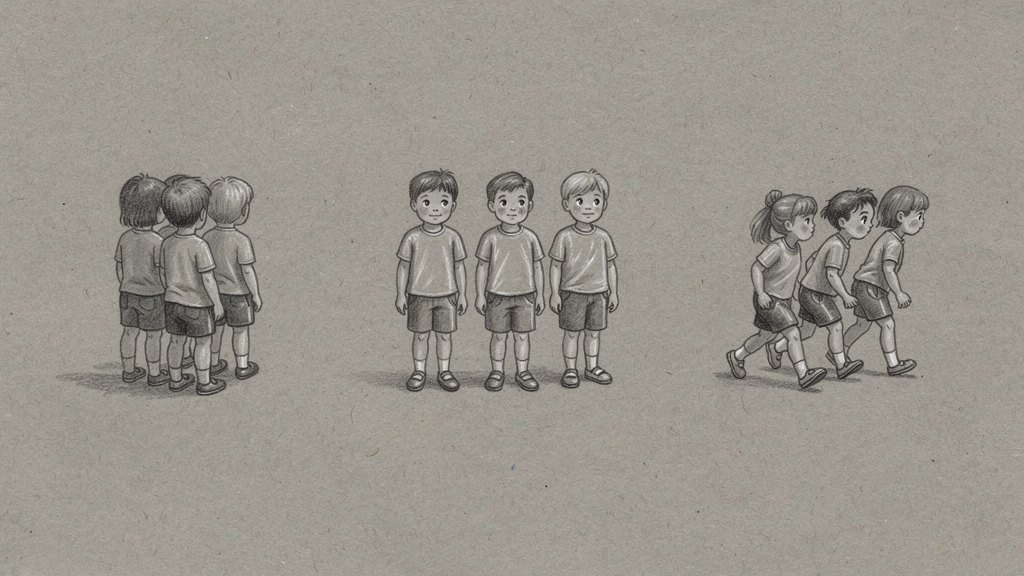
When I did my doctoral research at Arizona State University on the effects of martial arts on bullying in children, we asked kids what they usually do when they see a student being bullied.
- 38% said nothing, because it’s none of my business.
- 27% said they don’t step in, though they believe helping is the right thing.
- 35% said they try to help.
Add the bottom two and 62% of kids either help or want to. That’s the number I’d write on your whiteboard – almost two-thirds of the kids watching are on your side already!
Why don’t they act? Mostly because nobody has told them what to do, and because they aren’t sure the adults will back them up if they try. In the same research, 66% of the kids who did help said the staff and other adults around them were part of the problem.
The roles, and the one you’re trying to build
There are seven roles in this, and the same ones run in adult groups at work. (StopBullying.gov lays out its own version of these roles if you want a second framing to hand your instructors.)
The one it’s happening to.
The followers don’t start it, but they join in once it’s going.
They stand to the side, encourage it, and tell the others afterward that it was funny.
They don’t join in, but they like watching. Laughing on the sidelines makes the target feel worse and encourages everybody else to keep going.
They genuinely don’t care either way.
They dislike it and want to help, but they haven’t yet. This is your 27%.
Dislikes it and does something about it. This is what we want our Black Belts to be, and it is the one role on this list you can overtly train.
You’ve watched this happen without calling it by name. A beginner comes in, moves through the ranks, and somewhere along the way turns into a student who steps in. It isn’t the belt that did that. They did a hundred things that built the confidence to act, and your curriculum was the thing handing them those hundred things.
Protector behavior is a curriculum item, not a character trait
Joshua Polanin, Dorothy Espelage and Terri Pigott ran a meta-analysis specifically on whether prevention programs change bystander intervention behavior (Polanin et al., 2012). They found bystander behavior changes when you teach it, which is at least the same kind of claim I’m making about your floor. They weren’t studying martial arts schools, so take it as evidence that the teaching works rather than as your number.
The wider picture supports it too. Maria Ttofi and David Farrington reviewed school-based anti-bullying programs and found bullying down by about 20 to 23% and victimization down by about 17 to 20% on average (Ttofi & Farrington, 2011).
Those were school programs rather than martial arts schools, so I’d use them as evidence that teaching this works at all, rather than as a number to put on your wall. What you own that a school doesn’t is eight weeks of the same kids, in uniform, expecting to be told exactly how to do things.
Give them the actual words
The most common failure is telling kids to “tell an adult” and stopping there (which is where almost every program I see stops). Teachers are buried in reports from kids all day and can’t sort the real ones from the noise, and I don’t blame them for that.
Teach the difference plainly. Tattling is trying to get somebody in trouble or get attention. Telling is asking for help, for yourself or for somebody else. That’s a distinction a seven-year-old can hold, and it’s their job to make it before they walk up to the teacher.
Then give them the format, because being specific is what gets an adult to act.
Compare that to “John’s being mean.” ONE of them gets handled…
Add the ask on the end: “I’d like some help,” or “they need some help.” That single phrase is what separates it from tattling in the ear of a tired adult.
The good news is you’ll never run short of practice material, because kids bring you this stuff constantly. Did you ask me for something you need? Did you ask for something they need? Do they need protection? No? Then that’s tattling. Run that loop enough times and they learn to sort it themselves.
What to do with your next cycle
Put it in the curriculum instead of in a speech. Pick one class in your next eight-week cycle and teach the tattling-versus-telling distinction with the sentence format, out loud, with every student saying the words.
Then count. Ask your instructors how many times in the following month a student came to them with a specific report in that format instead of a vague complaint. That number is the only evidence that any of this took.
You’ve got two-thirds of every class already wanting to do the right thing. They’re waiting for somebody to tell them the words!
Common questions
Which kids are most likely to be bullied?
Kids who are quiet, cautious and sensitive, often with lower confidence, and who sometimes find adults easier to talk to than peers. It is a pattern rather than a rule, and confident, athletic students get targeted too.
What is a bully-victim?
A child who both bullies others and is bullied, roughly 6% in our data. They often struggle to read social signals, are frequently disliked by adults as well as peers, and have the worst outcomes attached to them in the research, which is a pattern rather than a verdict on any individual child.
Do most children want to stop bullying when they see it?
Yes. Asked what they usually do, 38% said nothing because it is not their business, 27% said they do not step in though they believe helping is right, and 35% said they try to help. That puts about 62% either helping or wanting to.
Why don’t bystanders step in?
Usually because nobody has told them what to do, and because they are unsure the adults will support them. Both of those are fixable with instruction rather than encouragement.
What is the difference between tattling and telling?
The dividing line is the purpose. One is aimed at getting another child in trouble or drawing attention; the other is a request for protection, for the speaker or for someone else. Adding a specific description of the incident and a direct ask makes an adult far more likely to act.
References
Moody, G. (2018). The effects of martial arts on bullying in children [Doctoral dissertation, Arizona State University]. ASU Library Repository. https://keep.lib.asu.edu/items/150974
Moody, G. (2024). Bullying prevention [Manuscript]. KarateBuilt L.L.C.
Polanin, J. R., Espelage, D. L., & Pigott, T. D. (2012). A meta-analysis of school-based bullying prevention programs’ effects on bystander intervention behavior. School Psychology Review, 41(1), 47–65. https://doi.org/10.1080/02796015.2012.12087375
Ttofi, M. M., & Farrington, D. P. (2011). Effectiveness of school-based programs to reduce bullying: A systematic and meta-analytic review. Journal of Experimental Criminology, 7(1), 27–56. https://doi.org/10.1007/s11292-010-9109-1
Adapted from Chief Master Greg Moody’s bullying prevention work. More at mastermoody.com.