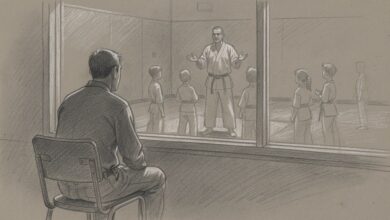

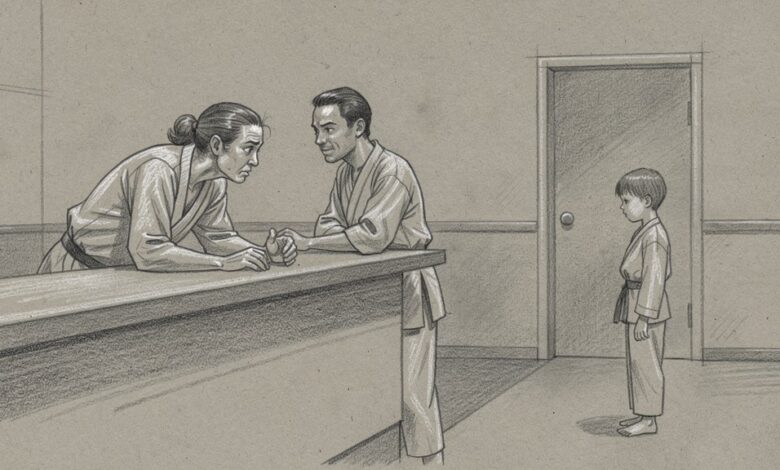
Your child finally told you. Here is what to say in the next twenty minutes, what to write down, the advice you should never give, and when to bring the teacher or principal in.
Key Takeaways
- Doctoral research surveying 227 kids across 22 schools in 17 states found 27% of beginners are bullied two to three times a month or more.
- That is roughly double the 14% rate found in the general population of children.
- Never tell your child to ignore it; what they hear is that you will ignore it, and it often escalates.
- Lead with empathy, say plainly that bullying is wrong and not their fault, and thank them for the courage it took.
- Gather who, what, when, where and how in writing, then take a copy to the teacher or principal instead of calling the other parents.
First, a number that should bother you
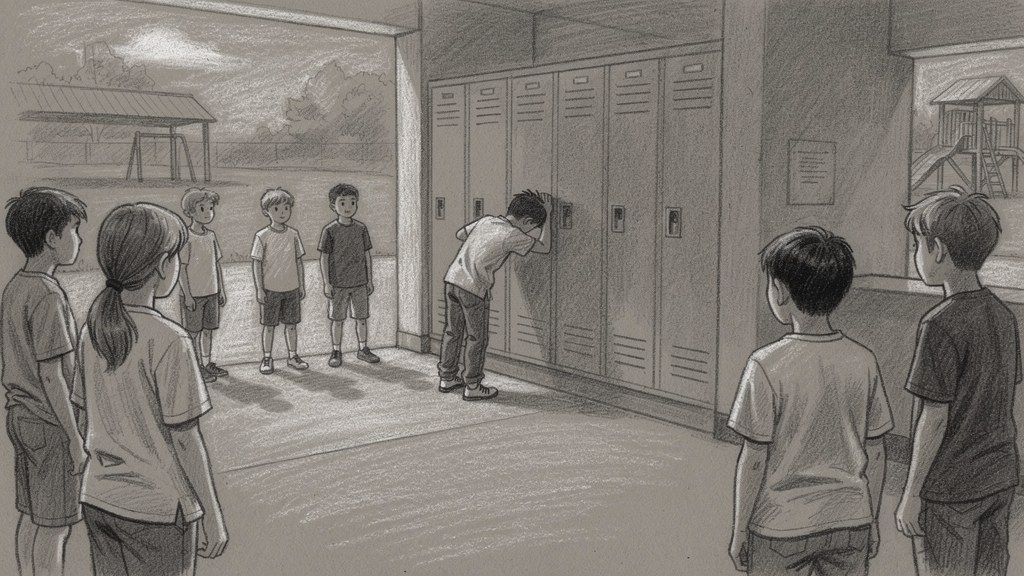
When I did my doctoral research at Arizona State University, we surveyed 227 kids across 22 schools in 17 states, using the Olweus questionnaire. Senior Master Laura Sanborn worked on it with me. We asked the kids, anonymously, and we asked their parents separately.
27% of the beginners are bullied two to three times a month or more. The average was 14% for the general population.
This was an important discovery that kids who come to martial arts are being bullied twice as much as the general population. Now let me give you a little bit of a spoiler. When we asked parents the question of whether their kids are being bullied, they answered that they didn’t think their kids were getting bullied this much. Parents were unaware that this was happening.
They were bullied 27% of the time, and the parents only thought they were bullied 4% of the time.
As parents we should be paying attention to this, but also understand that your kids probably aren’t going to tell you. Your kids may not even know the questions to ask or the things to say to you.
Which is why, if yours just did, the next part matters so much.
This article will focus on the best ways to support your child if they are being bullied. Another great resource in the United States is StopBullying.gov for more information, and I also recommend additional resources like children’s mental health professionals and of course your child’s school (part two covers the school conversation).
It Took A Lot For Your Child To Tell You
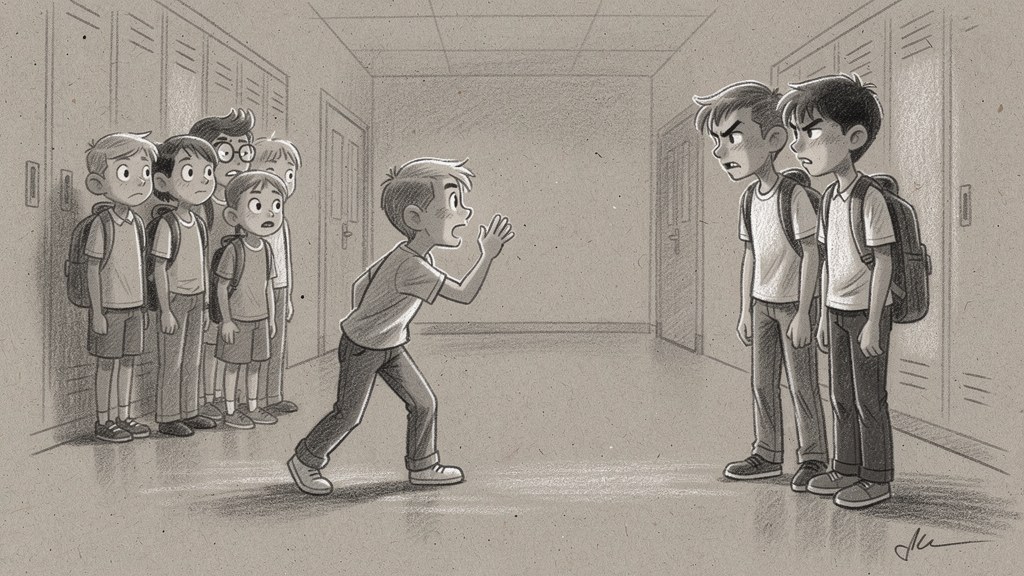
Children frequently do not tell their parents that they are being bullied because they are embarrassed, ashamed, frightened of the children who are bullying them, or afraid of being seen as a “tattler.” You’re probably not surprised after all the data we’ve looked at but understand that if your child tells you about being bullied, it has taken a lot of courage to do so. Your child needs your help to stop the bullying.
Begin With Empathy
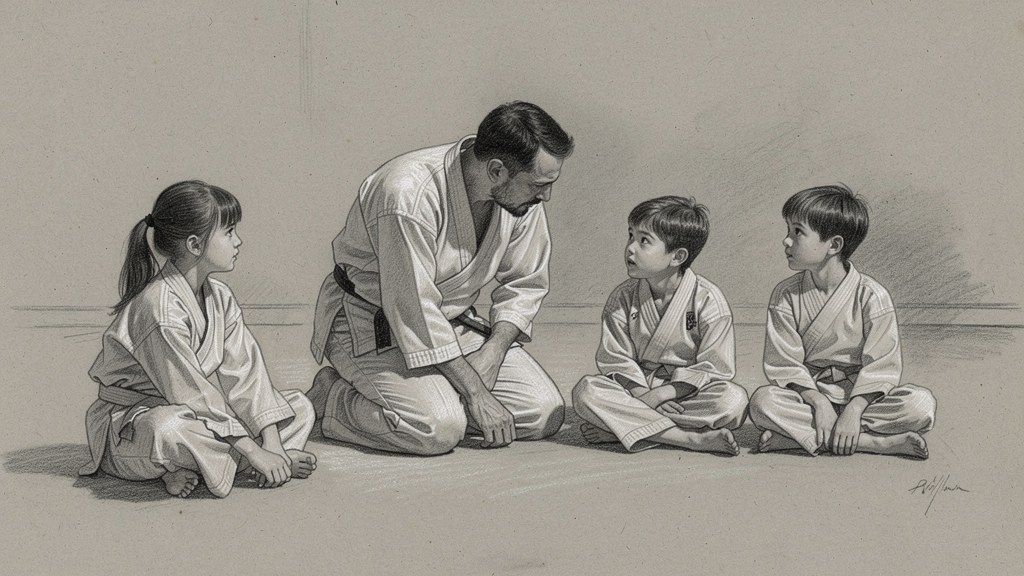
Remember we define empathy as the ability to understand and share the feelings of another. Even if you haven’t had the same experience as your child, you probably know what it feels like to be in a similar situation. If you can’t imagine that… it’s time to imagine that. Your child needs first to know that you understand them and how they are feeling.
Be Supportive And Gather Information
It’s never good advice to tell your child to ignore the bullying. What the child may hear is that you are going to ignore it. They wouldn’t be coming to you if they had the option of ignoring it. Ignoring it may turn in to escalation to a more serious problem. Also remember just because you may feel it’s not “that big of a deal” doesn’t mean it’s not a big deal to your child. Let them know bullying is wrong and not their fault. And you appreciate that they had the courage to tell them about it.
Don’t blame the child who is being bullied and at the same time don’t assume that your child did something to provoke the bullying. That seems weird, doesn’t it? I mean someone had to be at fault, right? Well, first, now isn’t the time to establish blame, and it really isn’t the point. Here are some things not to say:
“What did you do to aggravate the other child?”
“You’re just being dramatic!’
“It’s not that big of a deal!”
“Well just stay away from that kid and they won’t bother you!”
“Toughen up!”
“Stand up for yourself!”
You could say these things if you want your child to never tell you about problems, they have at school again (sorry for the sarcasm). Each of these is blaming the child for the issue. Look, I get it – our parents said this kind of stuff to us, so we figured that was good parenting. It wasn’t but don’t blame them either – they didn’t have this book to read.
So why don’t you want to blame the kid who’s doing the bullying? At the moment that’s not what your child initially needs. They do need you to understand the feelings and the circumstances. You also need to be careful that it’s bullying and not conflict.
Listen carefully and maybe even take notes on what your child tells you about the bullying. Ask him or her to describe who was involved (all parties) and how and where each bullying episode happened. For example:
- Where did it happen?
- When? How often?
- Who was there? Kids? Adults?
- Of course, what happened – but in calm detail where they feel support and empathy?
Helpful Keys
It may seem counter-intuitive but ask your child what he or she thinks can be done to help. Assure him or her that you will think about what needs to be done, and you will let him or her know what you are going to do. Don’t immediately react.
If you disagree with how your child handled the bullying situation, don’t criticize them. They’re a kid, and they were under stress – how many of us make the best decision “in the moment” and under duress.
Do not encourage physical retaliation (“Just hit them back”) as a solution. Hitting another student is not likely to end the problem, and it could get your child suspended or expelled or escalate the situation. We’ve covered this extensively elsewhere.
Calm your emotions. It’s understandable to be protective of your child and have strong emotions about what happened to them, as well as about how they responded. You have the benefit of time to decide the best course of action.
Contact your child’s teacher or principal.
Part two is entirely about how to talk to educators at your child’s school about bullying. Here is the summary. Understandably, Parents are often reluctant to report bullying to school officials, but bullying may not stop without the help of adults.
Helpful Keys When Talking To The School
Stay calm. Give the factual information about your child’s experience of being bullied including who, what, when, where, and how that you gathered earlier. If it’s written down and the administrator can get a copy, that’s better.
Emphasize that you want to work with the staff at school to find a solution to stop the bullying, for the sake of your child as well as other students. Your job isn’t to suggest how they punish the offending child or how the teacher is supposed to operate their classroom. They’re the professionals at the school, and they are going to have to own the solutions.
Under no circumstances should you contact the parents of the student or students who bullied your child. Sometimes this is a parent’s first response, but this will likely make matters worse. That’s the job of school officials to contact the parents of the child or children who did the bullying.
It’s a reasonable expectation for you to expect the bullying to stop. Talk regularly with your child and with school staff to see whether the bullying has stopped. If the bullying persists, contact school authorities again.
Summary
You’re ready to help kids! Mostly… In real life you may encounter situations that look like bullying but are just conflict between peers. Or you could encounter schools that are not focused on bullying prevention. You might also find a situation we haven’t covered here.
I wish there were always straightforward, easy 100% infallible answers for every situation. If I could give you a step-by-step cookbook for everything you could encounter, I would! As we’ve seen in other parts of this book, bullying is complex, but you have a big advantage now with all of this knowledge and these steps to follow. This will get you through most of what you’re going to find.
In part two we’ll go into a lot more detail on how to talk to school officials.
Common questions from parents
My child says it stopped. Do I still need to do anything?
Usually yes. Kids often say it stopped because they want the conversation over, or because they’re afraid that involving anybody will make it worse. Set a time to ask again in a couple of weeks, and keep the notes you took.
Should I tell my child to hit back?
No. Hitting another student is not likely to end the problem, it could get your child suspended or expelled, and it can escalate the situation.
Can I call the other child’s parents?
Under no circumstances. It is often a parent’s first instinct and it usually makes things worse. That call belongs to the school.
How do I know it’s bullying and not just a fight?
Bullying is intentional, it’s meant to hurt, there’s an imbalance of power, and it repeats. Two kids going at each other as equals is conflict, and conflict can be talked out. Bullying can’t.
My child won’t give me details. What do I do?
Ask what they think would help rather than what happened, and let them answer that first. Then come back to where, when, how often, and who else was there. Take notes either way.
What if I already said one of the six things on that list?
Most of us have (I have). Go back and say you got it wrong, that you’re glad they told you, and that it isn’t their fault. Kids give you more chances than you’d expect.
Adapted from Bullying: Truths, Myths, and What To Do! by Chief Master Greg Moody, Ph.D. Part two covers how to talk to the school. More at mastermoody.com.
References
Moody, G. (2012). The effects of martial arts on bullying in children [Doctoral dissertation, Arizona State University]. ASU Library Digital Repository. https://keep.lib.asu.edu/items/150974
Moody, G. (2024). Bullying: Truths, myths, and what to do! (ISBN 9798874138547).
Olweus, D., & Limber, S. P. (2010). Bullying in school: Evaluation and dissemination of the Olweus Bullying Prevention Program. American Journal of Orthopsychiatry, 80(1), 124–134. https://doi.org/10.1111/j.1939-0025.2010.01015.x
StopBullying.gov. (n.d.). Bullying prevention resources for parents. U.S. Department of Health and Human Services. https://www.stopbullying.gov