
NAPMA Martial Arts Professional Lifetime Achievement Awards
The Lifetime Achievement Award
Presented in recognition of extraordinary lifetime contribution, influence, leadership, and impact on the martial arts profession.
Joe Lewis first · Jhoon Rhee 1999 · Fumio Demura 2000 · Ernie Reyes, Sr. 2003 · Stephen Oliver 2003 · Tony Robbins 2003 · Jeff Smith 2008 · J Pat Burleson 2009 · Brian Tracy 2010 · Nicholas P. Cokinos 2015 · Chuck Norris 2026
Joe Lewis
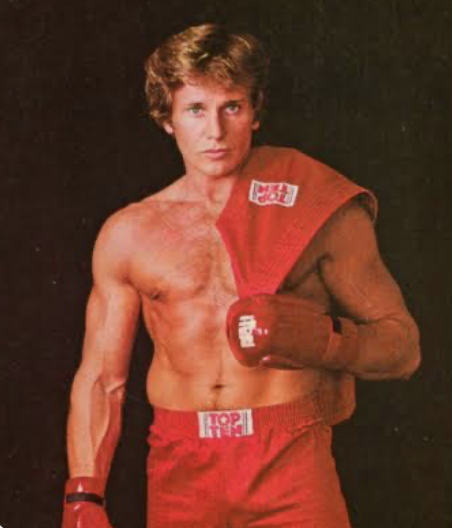
Widely regarded as one of the most influential American martial artists of the modern era, Joe Lewis helped redefine what was possible in competitive martial arts and professional fighting. A United States Marine and legendary karate champion, Lewis became one of America’s first major full-contact karate stars and a pioneering figure in the development of American kickboxing. Known for his exceptional athleticism, fighting intelligence, relentless pursuit of improvement, and willingness to challenge conventional thinking, he influenced generations of competitors, instructors, and martial arts professionals. His accomplishments as a fighter were matched by his lifelong commitment to teaching and advancing the technical sophistication of the martial arts.
NAPMA recognized Joe Lewis with its Martial Arts Professional Lifetime Achievement Award in honor of an extraordinary career that helped shape American martial arts.
Jhoon Rhee
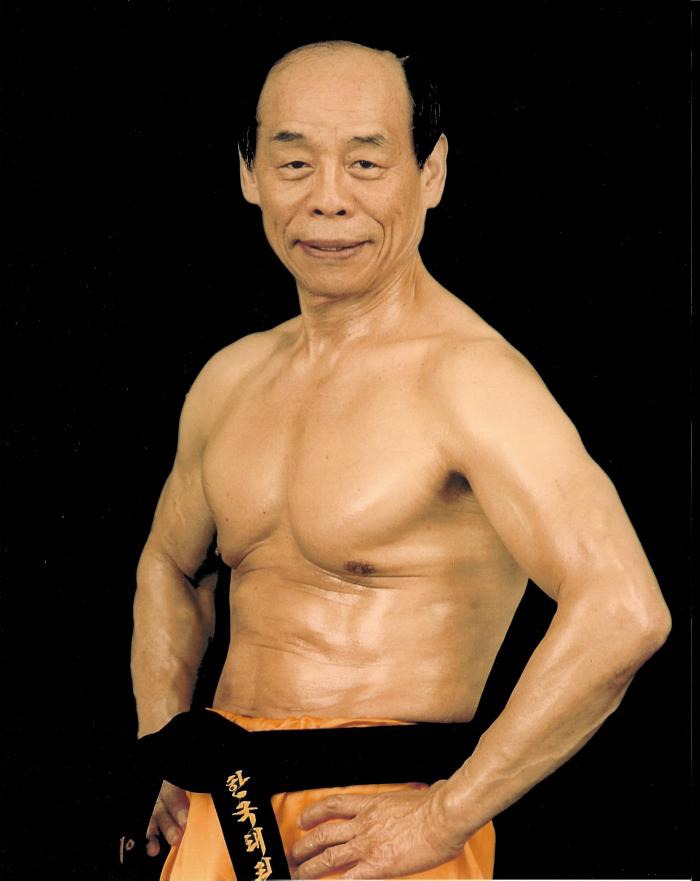
Known throughout the industry as the “Father of American Taekwondo,” Jhoon Rhee was one of the most consequential figures in the growth of martial arts in the United States. After arriving in America in the 1950s, Rhee became a pioneering instructor, entrepreneur, innovator, and tireless advocate for martial arts education, ultimately building a network of schools and introducing Taekwondo to thousands of students — including members of Congress and other national leaders. His influence extended far beyond physical technique: Rhee championed character development, discipline, academic achievement, leadership, and the idea that martial arts schools could become powerful institutions within their communities. His students included future global leadership authority Tony Robbins, who earned his Black Belt under Jhoon Rhee.
NAPMA recognized Grand Master Jhoon Rhee with its Martial Arts Professional Lifetime Achievement Award for a lifetime devoted to advancing martial arts and establishing the professional foundation upon which generations of American instructors and school owners have built.
Fumio Demura
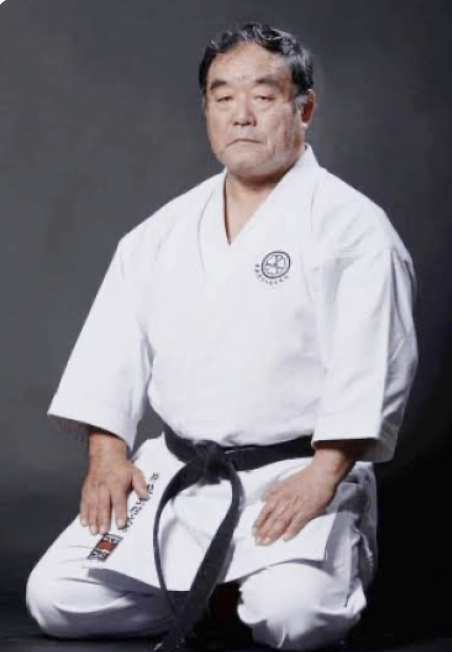
Fumio Demura was one of the most respected and beloved martial arts masters of his generation and an important ambassador for traditional Japanese martial arts in the United States. Internationally recognized for his expertise in Shito-Ryu karate and Okinawan kobudo, Demura devoted his life to teaching, demonstrating, and preserving martial arts while introducing them to audiences far beyond the dojo. His extraordinary demonstrations, seminars, books, films, and decades of instruction influenced countless martial artists worldwide, while his work in Hollywood — including his celebrated association with The Karate Kid — helped bring authentic martial arts to popular culture. Revered for his humility, technical mastery, and dedication to his students, Demura represented the highest ideals of the martial arts profession.
NAPMA honored Fumio Demura with its Martial Arts Professional Lifetime Achievement Award for his exceptional lifelong contribution to martial arts education, culture, and international understanding.
Ernie Reyes, Sr.
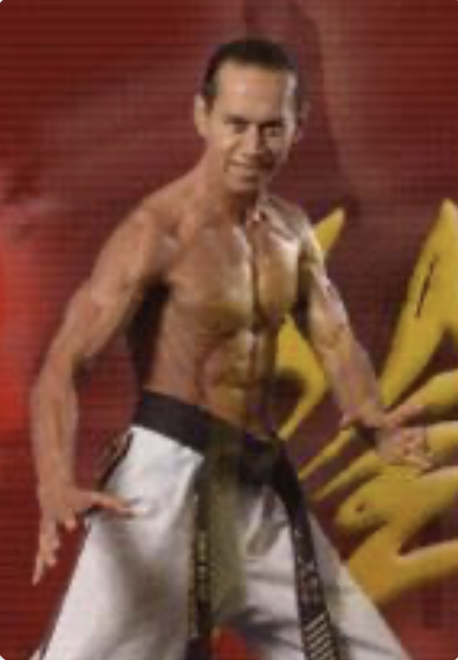
Ernie Reyes, Sr. built one of the most recognizable martial arts organizations in the United States and helped define what a modern, performance-driven martial arts school could be. Beginning his training in 1966 and competing at the highest level — winning the U.S. National Taekwondo Championship in 1977 and taking bronze at that year’s World Taekwondo Championships — Reyes went on to co-found the West Coast World Martial Arts Association, which grew to more than 35 schools serving over seven thousand students, and served as its head instructor for more than three decades. The West Coast Demo Team, which he led and choreographed from the early 1980s onward, fused traditional martial arts with music and gymnastics and became one of the most imitated performance formats in the industry. Reyes also brought martial arts to a wide popular audience through his fight choreography and on-screen work in film and television, and through the career of his son, Ernie Reyes, Jr.
NAPMA recognized Ernie Reyes, Sr. with its Martial Arts Professional Lifetime Achievement Award for a lifetime of excellence as a competitor, innovator, instructor, and builder of one of the most influential school organizations in the profession.
Stephen Oliver

Grand Master Stephen Oliver has devoted more than five decades to martial arts as a student, instructor, school owner, entrepreneur, publisher, association leader, and business coach to martial arts professionals. Beginning his training in 1969 and opening his first school in 1975 at age 15, Oliver went on to build one of the most successful martial arts school organizations of his era, growing to thousands of students and a multimillion-dollar enterprise while still in his twenties. His impact ultimately expanded from operating schools to helping professionalize the industry itself through decades of consulting and coaching, his leadership of the National Association of Professional Martial Artists (NAPMA), and his role as Publisher of Martial Arts Professional magazine. Through NAPMA and Martial Arts Wealth, Oliver has worked with generations of school owners to improve their marketing, enrollment, retention, leadership development, profitability, and professional standards.
A 10th Degree Black Belt and longtime advocate for treating martial arts instruction as both a life-changing mission and a serious profession, Grand Master Stephen Oliver received NAPMA’s Martial Arts Professional Lifetime Achievement Award in recognition of his enduring contribution to the growth, professionalism, and economic success of the martial arts industry.
Tony Robbins
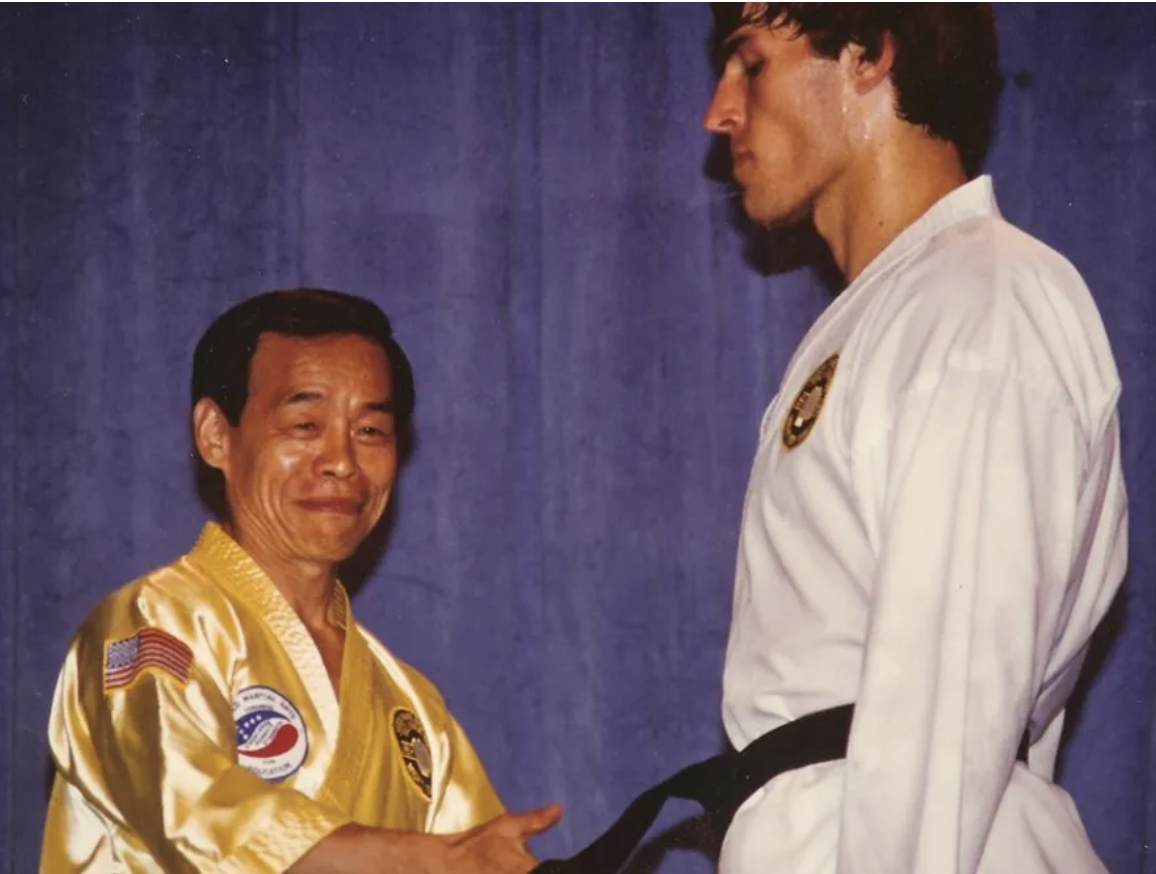
Tony Robbins is internationally recognized as one of the world’s most influential authorities on personal achievement, leadership, peak performance, and human potential — but an important part of his formative development came through martial arts. Robbins trained under the legendary Jhoon Rhee and earned his Black Belt under Grand Master Rhee, whose philosophy emphasized discipline, personal responsibility, confidence, leadership, and continuous improvement. Robbins went on to build an extraordinary global career as an entrepreneur, author, strategist, philanthropist, and advisor whose seminars and educational programs have reached millions of people around the world. Many of the principles central to professional martial arts — goal setting, disciplined action, overcoming limitations, leadership, and helping others achieve meaningful transformation — are likewise central to Robbins’ life’s work.
NAPMA recognized Tony Robbins with its Martial Arts Professional Lifetime Achievement Award in acknowledgment of both his martial arts roots and his extraordinary lifetime contribution to personal development, leadership, entrepreneurship, and the principles martial arts professionals strive to instill in their students.
Jeff Smith

Grand Master Jeff Smith is one of the defining figures of the golden age of American sport karate and professional full-contact competition. A protégé of Grand Master Jhoon Rhee, Smith became a multiple-time national karate champion and, in 1974, won the inaugural Professional Karate Association World Light Heavyweight Championship, helping establish full-contact karate as a legitimate professional sport. His career included competing against many of the era’s greatest fighters, appearing before major international audiences, and later becoming an influential instructor, coach, school operator, and martial arts business leader. Beyond his championship record, Smith has spent decades developing students, instructors, champions, and successful martial arts professionals while preserving the demanding standards of excellence and character associated with his generation of pioneers.
NAPMA honored Grand Master Jeff Smith with its Martial Arts Professional Lifetime Achievement Award for his exceptional contributions as a world champion, teacher, leader, and lifelong ambassador for professional martial arts.
J Pat Burleson
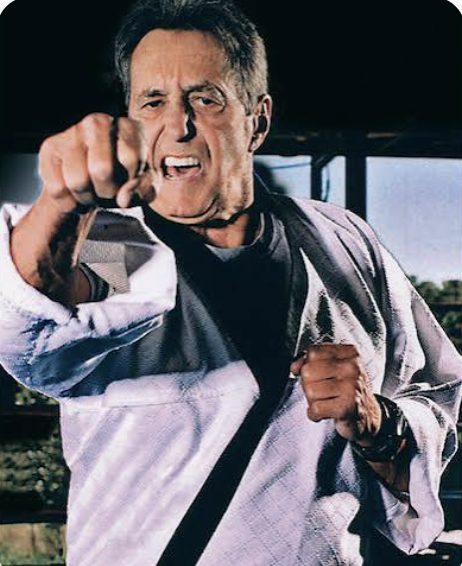
Grand Master J Pat Burleson holds a 10th-Degree Black Belt and founded the American Karate system. He began his martial arts study in 1958 with Grand Master Jhoon Rhee, having already trained in Okinawa and won a Golden Gloves boxing title. He taught the system to Chuck Norris, Bob Wall and Joe Lewis, and the lineage that starts with him runs back almost fifty years and out through thousands of schools across the United States. Of everyone who shaped the commercial martial arts school, he was the catalyst — the one who first made those systems work.
NAPMA presented Grand Master Burleson with its 2009 Lifetime Achievement Award at that year’s Extreme Success Academy. Read his interview with Stephen Oliver.
Brian Tracy
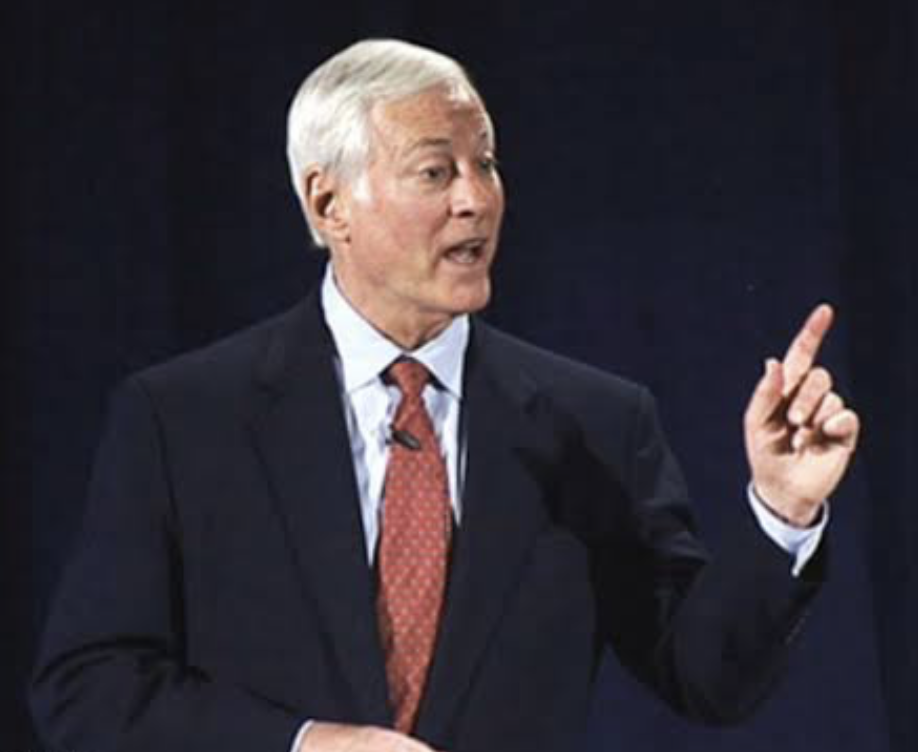
Before becoming one of the world’s best-known authorities on sales, achievement, leadership, and business success, Brian Tracy began an important chapter of his professional career as a Black Belt and martial arts school operator, giving him a direct connection to the challenges of teaching martial arts while building and operating a successful school. Tracy ultimately became an internationally recognized speaker, author, entrepreneur, and business educator whose work on goal setting, sales, time management, leadership, and personal achievement has influenced millions of people and countless business owners worldwide. His teachings have particular relevance to martial arts professionals because they reinforce many of the principles at the heart of martial arts itself: self-discipline, clearly defined goals, continuous improvement, personal responsibility, persistence, and achievement through purposeful action.
NAPMA recognized Brian Tracy with its Martial Arts Professional Lifetime Achievement Award for his remarkable lifetime contribution to personal and professional development and for bringing principles with deep roots in martial arts discipline into the lives and businesses of people throughout the world.
Nicholas P. Cokinos
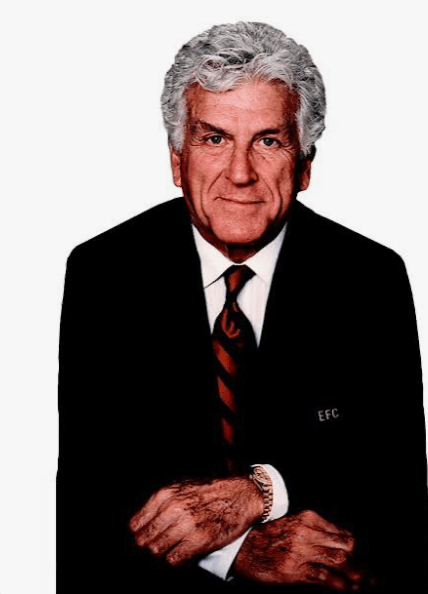
Founder, Educational Funding Company
Nick Cokinos may be the most consequential figure in the history of our profession that the general public has never heard of. He did not win world titles and he did not appear on television. What he did was harder and, for the people reading this page, more important: he taught martial arts school owners how to run a business.
He came to the martial arts by an unusual route. Born in 1921, he attended the United States Military Academy at West Point before continuing at Georgetown University in Washington, D.C. He then entered the professional dance-school industry — first with the Arthur Murray organization and later as a leader in the Art Linkletter–Fred Totten Dance Studios, ultimately operating seven locations around the Washington metropolitan area.
That background mattered enormously. Long before anyone in the martial arts had heard the words “recurring tuition,” the professional dance industry already understood leads, appointments, enrollment conferences, instructor development, children’s programs, multi-location management — even after-school programs that picked children up and transported them to lessons. Nick arrived in the martial arts already knowing how a professional instructional business could operate. Almost nobody else in our field did.
Grandmaster Jhoon Rhee had a gift for recognizing talent and bringing it into his orbit, and he did exactly that with Nick. Working alongside Grand Master Jeff Smith and Ned Muffley, Nick helped put professional business systems around an extraordinary martial arts vision. The Jhoon Rhee Institute became the model an entire generation of school operators learned from.
He then founded Educational Funding Company. History tends to remember EFC as a billing company, and that misses the point entirely. EFC was an educational organization disguised as a billing company. Nick wanted to create professional school owners — owners who knew their numbers, controlled their expenses, built assets, operated with integrity, and stopped believing that financial success somehow compromised the martial arts. He surrounded himself with a Board of Directors and a network of the industry’s most successful operators, not to be congratulated, but to find out what was actually working and then teach it to everybody else.
Above all he taught school owners to know their numbers. How many inquiries. How many appointments. How many showed. How many enrolled. Retention. Payroll as a percentage of revenue. Rent. Actual profit. Today the industry calls these KPIs. Nick was teaching them to martial arts school owners decades before anyone in our profession had the vocabulary for it — and he had no patience whatsoever for excuses.
I first met Nick in 1976, and again in 1978, and I could not possibly have understood then how important he would become to my life.
Later, while attending Georgetown University, I worked as a head instructor and branch manager for the Jhoon Rhee Institute in Washington, D.C. Jhoon Rhee was the visionary. Jeff Smith was the champion and one of the emerging great school operators. Ned Muffley was an extraordinarily disciplined manager. And Nick Cokinos understood business. I had the tremendous good fortune to be the young guy in the room, and I paid attention. I wasn’t getting an MBA in martial arts business from a university — I was getting it from those four men. After more than five decades in this profession, I can tell you that was a pretty extraordinary faculty.
I later became a founding member of the EFC Board of Directors, and from roughly 1983 through 2001 a great deal of my work in the EFC world was helping carry those systems out to the industry — seminars, conventions, articles, and direct work with school owners. Today I can walk into a well-run martial arts school almost anywhere in America and recognize ideas that came through that lineage. The people teaching them often have no idea where they originated. That is how influence works.
Nick could be demanding. He could be opinionated. He could tell you something you did not particularly want to hear. Good. Those are usually the people who teach you the most. I did not need another person telling me everything I was doing was wonderful. I needed someone who had accomplished something, knew what he was talking about, and was willing to challenge my thinking. Nick did that. He was my mentor, my business associate, and eventually my friend.
He did not simply help martial arts schools collect tuition. He helped martial artists build businesses capable of supporting their mission.
— Grand Master Stephen Oliver
CEO and Chairman, NAPMA · Publisher, Martial Arts Professional
For his pioneering role in professionalizing martial arts school management; for his historic work with Grand Master Jhoon Rhee; for founding Educational Funding Company and building it into an engine of business education for our industry; for his mentorship of generations of school owners and industry leaders; and for an enduring influence still visible in the tuition, enrollment, retention and management systems used by professional schools throughout the world — NAPMA and Martial Arts Professional posthumously inducted Nicholas P. Cokinos into the Martial Arts Professional Lifetime Achievement Awards in 2015.
Chuck Norris
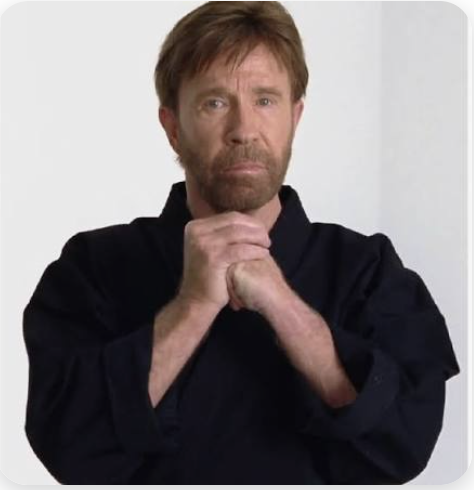
There are champions who win tournaments. There are instructors who build great schools. There are performers who bring martial arts to the screen. And there are humanitarians who use martial arts to change lives. Chuck Norris was all four.
He began training while serving in the United States Air Force in Korea, then came home and entered the American tournament circuit at its most competitive. He did not start out winning. He lost early, and he wrote later that those losses were the making of him — he might lose again, but he would not lose the same way twice. He learned American Karate from Grand Master J Pat Burleson, a Lifetime Achievement recipient himself. In 1967 he won S. Henry Cho’s All-American Karate Championship at Madison Square Garden. In 1968 he took the Professional Middleweight Karate Championship, and he retired a six-time undefeated Professional Middleweight World Champion. In 1969 he won karate’s Triple Crown and was named Fighter of the Year by Black Belt magazine.
He then did what almost no martial artist had done before him: he built a chain of schools in Southern California, taught thousands of students — among them Steve McQueen, Bob Barker, Priscilla Presley and Donny and Marie Osmond — developed his own system, today called the Chuck Norris System, and founded the United Fighting Arts Federation, which reports more than 3,300 black belts worldwide.
His friendship with Bruce Lee produced the fight in the Roman Colosseum in The Way of the Dragon, still one of the most recognized martial arts sequences ever filmed. From there he became a genuine international movie star — Good Guys Wear Black, A Force of One, The Octagon, Lone Wolf McQuade, Code of Silence, Missing in Action, The Delta Force — and then, from 1993 to 2001, eight seasons and 203 episodes of Walker, Texas Ranger. Week after week, millions of people watched a martial artist as the hero of a network television series. It is difficult now to remember how unfamiliar martial arts were to the American public before men like Chuck Norris changed that. Every school owner working today inherited some of the public awareness he spent decades building.
His most important work, though, did not happen in an arena or on a set. It happened in public schools. In 1990, with the help of President George H. W. Bush, he founded what became Kickstart Kids, launching in four Texas schools in 1992. The idea was simple and, at the time, revolutionary: put trained martial arts instructors inside public schools and teach character — discipline, responsibility, kindness, respect, courage, dedication, honesty and loyalty — as part of the school day. As of 2026, Kickstart Kids reports approximately 8,349 students in 55 Texas public schools and more than 120,000 young people impacted since it began.
So his legacy is not finally measured in championships, black belts, ratings or box office. It is measured in children. Children who found confidence, discipline, mentors, and a reason to lead. That may be the biggest championship he ever won.
For Grand Master Jeff Smith and me, this one is different. Chuck wasn’t a name out of the history books. He was our friend.
When a man gets as famous as Chuck did, the public image tends to swallow the person. We knew the person. We knew someone who never once forgot that before Hollywood, before television, before “Chuck Norris” became a part of the culture, he was a martial artist. That was always the foundation.
Jeff and I came up in the same generation he did — the people building the schools, developing the competitors, starting the organizations, working out how to bring professional martial arts instruction to the American public. We watched Chuck do something none of us could have predicted back then. He carried martial arts onto the biggest stages in the world. And when he got there, he used the platform to promote the values the martial arts had given him.
That is the part worth remembering. The measure of a martial artist is not how famous he becomes. It is what he does with the influence he earns. Chuck used his to make the martial arts more visible, more respected, and finally to hand a hundred and twenty thousand young people the same discipline and confidence that the martial arts had handed him.
He passed on March 20, 2026, at 86. His championships built his reputation. His movies and his television work made him an icon. But the lives he changed made him a legend.
— Grand Master Stephen Oliver
CEO and Chairman, NAPMA · Publisher, Martial Arts Professional
— Grand Master Jeff Smith
Chief of Instruction, Martial Arts Wealth Mastery
For his competitive career; for a lifetime of teaching and leadership; for helping introduce the martial arts to hundreds of millions of people; for raising the standing of the professional martial arts instructor; and above all for turning his own success into a mission that has already reached more than 120,000 young people — NAPMA and Martial Arts Professional posthumously inducted Chuck Norris into the Martial Arts Professional Lifetime Achievement Awards, Class of 2026.


The NAPMA Martial Arts Professional Lifetime Achievement Award is presented by the National Association of Professional Martial Artists and Martial Arts Professional magazine. Archive footage courtesy of NAPMA.
Where these awards sit in the record. The Lifetime Achievement Award is one thread in a longer story — the association that presented it, the magazine that covered it and the events it was given at. That story is set out year by year in Thirty Years of NAPMA, and the people who wrote the coverage are listed in The Contributors.
How the award works
The Lifetime Achievement Award is conferred jointly by the National Association of Professional Martial Artists and Martial Arts Professional, the association’s journal. It recognises a career rather than a year: the whole of what somebody contributed to the martial arts as a profession, judged once, late, and only once.
What it recognises
The register above is the definition. Read across eleven recipients and the same criteria appear: competitive achievement at the highest level of the era; teaching that produced other teachers; building institutions the profession still runs on — schools, associations, certification bodies, funding and business systems; and carrying the martial arts to an audience that would not otherwise have found them. No recipient has been honoured for a single accomplishment. Every one of them changed how the next generation of school owners was able to work.
How often it is given
There is no fixed annual cycle, and the award has deliberately not been given every year. Eleven people have received it since the 1990s. There was a gap of fifteen years between Brian Tracy in 2010 and the two inductions that followed — Nicholas P. Cokinos, honoured posthumously in 2015, and Chuck Norris, honoured posthumously in 2026. The association has consistently preferred a long silence to a routine one.
Who decides
Recipients are selected by the association’s leadership in consultation with past recipients and senior figures in the profession. Awards may be conferred posthumously; two of the eleven have been. The award is not open to nomination by purchase, sponsorship or advertising, and no part of the register has ever been for sale — a point set out plainly in the journal’s editorial policy.
Proposing a recipient
Suggestions from the profession are welcome and are read. Write to the publisher through NAPMA, setting out what the person built and who can attest to it. Where the historical record on a past recipient is incomplete or wrong, we want to hear that too; the register is intended to stand as the profession’s record, and corrections are made on the record.