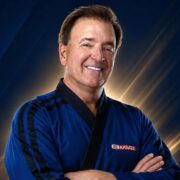

Billy Blanks — Seventy Million Tae Bo Sales
Billy Blanks began his study of the martial arts as a child and went on to win seven world karate championships. He created Tae Bo, the fitness programme that introduced martial arts movement to a mass audience and sold in the tens of millions, and has appeared in films alongside many of the era’s action stars. In this interview he discusses building a training system, taking it to market, and what school owners can learn from the way a martial arts product reaches an audience far outside the dojo.
Listen to the interview
This interview was conducted for Martial Arts Professional, the trade magazine the National Association of Professional Martial Artists has published since 1996, and appeared in the magazine’s interview series. It is republished here as part of the magazine’s archive. The original recording date is not stated in the surviving archive record.
Browse the full interview archive
Full transcript
Transcript generated from the original recording and lightly edited for readability; minor errors may remain.
What you’re listening to ladies and gentlemen are the sound stylings of our next guest on the Sounds of Success, Mr. Billy Blanks. From his Workout Music CD, Blastoff Lisdock. Few figures in the martial arts world have been able to make it to the very top level in their field. Fewer have achieved it in more than one field, and even fewer still have maintained the true spirit of the martial arts in the ways that Billy Blanks has. So enjoy as Rob Colasanti talks with Billy Blanks, 78 million Tae Bo sales later. Billy Blanks, welcome to the Sounds of Success. Well, thank you. I’m glad to be here. Really, an honor and a pleasure to talk to you. I think everybody in creation knows who you are from your Tae Bo program, and we’ll talk about that a little bit later on in this interview.
But for openers, since everybody listening to this CD right now is a martial arts professional, I’d like to talk a little bit about your background in the martial arts. How long have you been training?
Read the full transcript
How many styles do you hold black belts in?
Tell us a little bit about your roots in the martial arts. Well, you know, I started martial arts at 12 years old. I got a chance to see Bruce Lee play the green hornet on TV, which, you know, a lot of kids have seen. And then from that, he motivated me into wanting to be able to be aware of my body like he was, you know, and get that discipline. And I got involved with a guy in Erie, Pennsylvania. You know, I got my black belt, you know, within two and a half years. I got my black belt and became, you know, a regional fighter. And then from that point on, you know, I made the United States Karate Team with First America, who won the national title. Made the United States Karate Team, amateur karate team.
Fought for them for about four or five years. Do that. That gave me a chance to be on the Trans World Bow Wiser Team first, and then from Bow Wiser to Trans World Oil Team. And then from that time on, you know, I fought for Trans World, then I retired. I haven’t trained in martial arts for over 40 years now. I’ve been, you know, I started off with Tung Soo Do, my first style, Tung Soo Muda Kwan. And then from there, it went over to Taekwondo. And right now I hold an eight degree black belt in Taekwondo from under Master Park Jung Soo from Swam, Canada. And I have a third degree black belt in Hung Gar, Troi Gar, Kung Fu from Master Ting Fong Wong. And Judo, and a black belt in Shodokan Karate. So I’ve been studying martial arts for a long time, and I love the martial arts.
And, you know, that’s where Tae Bo came from. And to me, I always tell people Tae Bo is nothing but a supplement for martial art people. So, wow, you really have been studying a long time. 40 years, got black belts in a whole bunch of different styles. Did you fight Waco or Wuko?
Yeah, I fought Wuko. Wuko? Right. He was an amateur karate, Japanese karate association, you know?
Yeah. I’ve been fighting that for probably seven, eight years. Wow. Very impressive. Now, as a fighter, I know you’ve won many tournaments and titles. Your name comes up all the time in competition with a lot of the real fighters that are still out there, either coaching, you know, these days, or once great fighters. I’m just curious, which tournament or title that you won are you most proud of?
I can say the U.S. Open. Really? Florida, yeah. Mike Sawyer and Mike McCoy. Right. I won that tournament because that was a big tournament for me. If I won that tournament, I would become number one in the country, you know?
Yeah. And I actually beat Steve Anderson and I beat a lot of other guys there. And that was a time where people were saying, well, if Billy going to be number one, he got to beat Steve. And, you know, that was the tournament where I beat him at, you know, and became, I won that tournament and became, you know, number one fight in the country in 1984, 85, you know?
[04:07] So you actually defeated Nasty? Yes. Wow. That is interesting. He was probably the hardest competition, you know, out of, Nasty beat me probably 12 times, 14 times, you know, and before I could get it right, you know?
I think Nasty beat everybody about 14 times. Right. You know, he was an awesome point fighter. He knew how to play the game. And, you know, that’s where I learned from him. He knew how to play the game well. And I felt like in order for me to beat him, I was not going to have to think about so much, just get out there and have fun. You know, martial arts, I love martial arts and I train hard. And I think I was making it like work. And you know, you’re making a chore and you’re thinking too much. So I got out there and I said, you know what?
I went away from Karate for like a year and a half and I started boxing. And then came back, you know, to Karate because my coach Chuck Merriman said that this guy was going to give this big tournament in Bermuda. And the tournament that he gave in Bermuda was like Enter the Dragon. All these top fighters come from all over the world, you know, to fight. I had seen Nasty and them for almost a year, a year and a half. And went back to competition and back to my first fight was going to be actually Jeff Smith, if I just met sure and I beat Jeff Smith and then, you know, end up fighting Nasty for the championship. And I ended up winning the championship. And that, you know, kind of turned my martial arts career around as a fighter because now people saw that I can beat Nasty and Nasty.
He was beatable. Yeah, he was the guy to try to beat. And I’ll tell you one thing, beating him is really one heck of an accomplishment. Yep. I still remember you at these tournaments, just hitting people with that amazing somersault kick you used to throw. You were just always in such phenomenal condition, an amazing athlete. And of course, you are still today. Billy, describe what your training habits were like back then. How did you stay in such incredible shape?
Well, I just think for martial arts and for myself, you know, I knew that outside of this being in karate shape, I had to be an athlete at the same time. So I did a lot of things that athletes would do. I’d run 100 yard dashes. I’d run 8 80s. I’d run 40s for my speed. I was weight trained. I would do calisthenics. And my goal was to get myself in such good physical condition. When I got ready to get out there and spar, I knew I was in good physical condition so my body could execute the karate techniques. I think sometimes now, because, you know, youth are coming up with that natural ability to be able to kick high and not, they don’t need to stress. I mean, they got the gift of this. They can just put on uniform and look like a martial artist, you know?
Yeah. And I think that I think the discipline as far as the physical training has been lost for martial arts. And I think if the youth was to put that back into martial arts, they would last longer. They would love their martial arts more. And with me, I feel like, you know, because I did train, I don’t have hip problems. I don’t have elbow problems. I don’t have anything wrong with my joints, you know, and I’m pretty blessed because of that. Absolutely. I’ve taken care of myself. And I think that’s one of the most important things about my training is I wanted to be in good physical condition. So I know when I walked out there in the ring, I didn’t have to worry about anything else. Karate wise, I would be in shape, but I need to be in good physical condition so I could execute and also be an athlete while I’m fighting.
No doubt. Yeah. You look like a totally ripped in shape professional football player half the time. Just amazing. I’m kind of curious. Who are some of the martial artists that inspired you and you were coming up through the ranks?
Well, Chuck Norris was the one who inspired me because, you know, he was he was my tung the same style. Yeah. And I liked his I liked the way he fought like this charisma in the ring. Joe Louis was another one. Yeah. Bruce Lee was, you know, first and most. He was the one who inspired me to get in really good shape. Because Bruce Lee always would say the body will always tell the truth, you know, if it’s out of shape, it’ll tell you that. And I love that. I love that when he said that, you know, that inspired me. Yeah. I like a lot of the old instructors like Master Parker. Ray McCullen was a guy I always wanted to be like, you know, I love Ray McCullen. He’s he inspired me a lot too as a fighter because I’ve never seen anybody who could throw so many techniques to be so smart while they were fighting, you know.
[08:20] And so he was somebody I always wanted to go up against. I always wanted to be able to notice, to ask questions to him about how he got his career, the way he got his career. And Steve Anderson was another one. Dan Anderson was another one. Bill Wallace. I mean, there’s so many great fighters out there that is really amazing. Like Wally Slokey. I don’t know if you know him. Absolutely. He got in Canada. He was amazing. Yeah. Michael Warren. I mean, Joe Hayes, all of them. I mean, it’s a lot of good people that I got an opportunity to see as a kid coming up and I said, well, you know what?
I want to kind of market myself after these guys, you know. Absolutely. And I should take their pictures and put them down in my basement because that’s where I trained at most of the time. I had to hang each one of their pictures on the wall. And each one of those guys, I should say, I want to take the best that he has and the best that he has from each one of them and then take my best and come up with a fighting system, you know. And that’s what I did. And clearly it worked for you. It’s my understanding that you have some very thought-provoking ideas on why martial arts is not increasing more in today’s society. What do you think some of the challenges are?
I think one of the most important things about why martial arts don’t increase is because of, you know, when people come up with a new system of martial arts, I think it’s in people’s face to make money instead of it being in people’s face to help save lives. Because as a martial arts does, it changes a child’s life and it turns them into a better person, you know, if it’s taught that way. And I believe if martial arts people would think about that, you know, more about saving people’s life. I would think martial arts would always be revved up and everybody would want to do it. But I think when you come up with programs like I’m just saying this off the hat, right?
Like a Ninja Turtle program and this kind of program, doing this kind of program, you got to make up programs every week to keep your studio running. And if the programs don’t do anything to help kids become better, then, you know, what’s the use of making that program up?
Because you’re saying that your style, to me, is saying that you’re style of martial arts can’t bring people in. You got to come up with a gimmick that’ll bring person in. So I guess, you know, part of your concern is that maybe people are getting the students in, but they’re just not delivering a good service. Keeping them. They’re not, you know, in the turnover for martial arts is outrageous. Yeah, sure is. People going quit, you know, and I believe it doesn’t have to happen like that. If people teach the true essence of what martial arts is all about, I think dojos around the world would be huge. Because all it is is to inspire life and make people better. But in most, you know, and I can’t say in most studios, I know in some studios that, you know, it’s not about life.
It’s about coming in and getting your belt. And that’s it. But it was about, you know, changing people’s lives and showing them that, you know, when you get your black belt, like always tell my kids, once you become a black belt, you know, you are you’re not an average kid anymore walking around the street. You’re above average. Now you like Superman. You get you got your you got your cape on, but it’s up underneath your clothes. And anytime you need it, you can always pull it out. I mean, not just in protecting yourself, but in your homework, in your discipline with your mom and dad and your school work. I mean, everything, you know, but, you know, I think that’s kind of lost. In some schools, it sure is lost. And I got to be honest with you.
I’m very inspired by what you just said. And I know all the NAPMA members listening to the CD will be also. That was some good stuff right there. Well, thank you. Billy, are you still teaching traditional martial arts classes? It sounds like it. Yeah, I teach traditional Taekwondo four days a week. Wow. I’m in my studio, you know, and I think that’s very important, too. People got to see the main instructor in the studio teaching class because I think that’s that drives people to come. And Billy Blank still teaching. That’s right. I love people. I love to give life. You know, always say if you plant a seed, you get a seed, you know. And as an instructor, to me, you have to be a farmer. You got to know how to put out seeds for harvest.
[12:27] And then harvest time comes and then you reap the benefits from it. And always say, reaping the benefits of a good student is you training the student to be a better person in life. And through that, you don’t go out and tell somebody else. And the next thing you know, you know, your studio is just flourishing. Yeah, you bet. You bet. And I assume you’re still teaching Tae Bo type classes as well. Oh, yes, I teach these four Taekwondo classes a week and I teach 11 Tae Bo classes a week. Wow. That’s something else. Interesting. Some school owners that teach martial arts fitness classes and you’ve probably heard this before. They’ve commented that the retention among fitness students is lower than it is among the gee and belt martial arts students. In other words, they say that martial arts students typically stay longer and they pay more.
You are undoubtedly the king of martial arts fitness. What’s your perspective on that?
I think it’s the other way. I think people come and stay in Tae Bo alone and they stay in martial arts. Why?
Because I always say when people come to do martial arts, they see that martial arts is slower. So that I tell people right away. I say when you come to a martial arts class, I said, do you know what you got to have?
You got to have not just integrity, you got to have some discipline because it takes discipline to be able to do martial arts. And it takes patience. Most people don’t have patience. That’s why they don’t want to go to martial arts. That’s why they can’t stick it out because they don’t have the patience and why it could be it could be because of what is being taught. You know, if it doesn’t have life to it and people will give up, you know, but if it’s something based on if you just based things just on belts, then that doesn’t that doesn’t grab people that won’t grab a person’s heart deal quit. But if you base things on life, then people will stay there because that’s what they’re looking for. You’re looking for somebody to put their hands on the shoulders.
Hey, man, I love you. Hey, lady, I love you. I can help you. All you need to do is give me your heart. Now give you my heart and watch and see what happens. Well, with Tae Bo, that’s what happens. People come into the studio. They come in there thinking about losing weight. But after they get in there for two or three weeks, they go, wow, this is not about losing weight. This is about learning about what I can do with my body, how much respect and honor I should have in my body. What I can do as far as being the athlete. I mean, you see mothers, I got people who’ve been in Tae Bo for 20 years. Whoa. So, you know, when it comes down to it, what you bring across to it, what you how do you give it to people?
I think with martial arts, that should be the same way. You know, it should be given to people out of abundance of the heart. You know, you give them if you show somebody some love, they don’t give it back to you. A hundred percent. I think in most karate studios, it’s so strict. Some of them are so. OK, come on in and see later by, you know, see, come on into class. See later by, you know what I mean?
It’s just hot and cold. Well, when people get bored, because sometimes the instructor walks in bored, you know, and if an instructor walks in bored, then a student’s going to be bored. Well, that’s very common right there. Yes. Yeah. And you always tell people when I’m teaching, I’m going to teach my martial arts class. I set up, I set up like an aura. You know, you set up a presence. They see me. My students see me put on my uniform. I get ready to walk into the dojang. They see me in their practice in my forms already by myself before they even get to the dojang because I set that up because people see, wow, look at, look at question them. He’s working out. You know, I want to be like, you know, you’ve got to inspire them.
And I think that’s something that most instructors don’t do. The only time a student see them is, you know, they might see him get out of their car and walk into the dojo. OK, lineup guys, ready?
[16:03] Yeah. In class. But if it wasn’t, but if an instructor can motivate a student by being in the dojo 10, 15 minutes early, going through his technique and bringing that. He got to bring in that that awesome pizzazz that he has when he stand before the students. So students go, wow. Well, it’s about leadership. It’s about motivation and relationship building. Right. And that has to happen because if that don’t happen, then people will get bored and people don’t get bored by themselves. They get bored because the person around them is boring. Yeah, yeah, I can tell just by listening to you that your school probably has very strong retention. Oh, yeah, you got I mean, my martial arts program is growing like you don’t know what. And because the martial arts program is growing, the type of people come and watch and go, wow, I want to go into martial arts.
Not created a system called type of one, you know, because I wanted the type of people to have be able to get built in type of one so they can understand what traditional martial arts is all about. I see. Very interesting. It’s no secret, Billy, that you’ve become a highly successful entrepreneur. Congratulations. Thank you very much. What are what are some of the the most important lessons that the last decade or so has taught you about business?
Well, I think one of the most important things you got to know what people want. You got to know how to approach what’s the approach to having a good business. I just think you have to have the heart. You got to have the patience. You got to have the endurance. And you got to want to do the work. A lot of people don’t want to do the work. When some people might get to the top, but then once they get to the top, I always say a leader is never comfortable because when a leader becomes comfortable, then he starts to lose things. Yeah. So my thing is I got to be there and things are going to come at me 24 seven. And this is my business. I got to run it like it should be run.
You can’t put it in the hands of other people. You know, when I’m when I hire instructors, my instructors that I bring into my studio, they got to be on the same line that I’m on. They’re not on the same. We’re not thinking the same than we can. Make things work. I think that’s very important and not, you know, I pay my instructors as well. I make sure I do that because if you don’t pay them well, then they’re not going to want they’re not going to be inspired to come in. So I think that’s very important to be able to have your hours. That’s my structure. What are you going to bring to the Billy Blanks World Training Center?
We already have a foundation. So what are you going to bring to enhance that?
How are you going to add to it? Right. Not take away from it. But how are you going to add to it and make it better?
You know, and my instructors come up with things, you know, and I say, well, see, that’s good. That’s a good principle. Let me see you add that to that. And I’ll hold it to it. Hold them on that. You know, when you say something, you got to hold a person to the word. Absolutely. I always say with me, I always being a good business person is a person you have to have heart about what you love to do and not give up once you feel like, OK, I’m making it. I’m doing really well. You can’t you can’t back up. Yeah. Well, I like what you said about, you know, you’re on it 24 seven. And I think some people when they get to the top, they kind of get complacent. And that’s when they start to die on the vine right there.
Right. And I’m always I’m always creative. I’m always working out. See, that’s another thing about marks, right?
Instructors themselves. They don’t work out anymore to certain points. But then they don’t they don’t train themselves. And when you don’t train yourself, you can’t be creative. So then you have to resort to gimmicks. You got to resort to, OK, let me create this kind of program and create this kind of program, create this because they’re not no longer doing what they need to do to inspire themselves, to inspire their students. I think that’s very important. My students see me train all the time. They see me create all the time. I’m always traveling around the world. I mean, six months out of the year, I’m I’m around the world. I go to army base. I’ve been to Iraq three times, been to Afghanistan twice. Been in Bosnia, Kosovo. I’ve been training in military for almost six years now.
[20:03] And being able to do that and just go around to other places and train everyday people. You know, that inspires me to see a person smile. That inspires you to want to be better at teaching. Yeah, yeah, no doubt. No doubt. All great points, Billy. You know martial arts guys as well as anybody. You’ve been around it all your life. And you know that many of these guys, they’re real good at martial arts, but they’re kind of weak in the area of business. And the sad part about that is that many people in that category, they’re struggling to make ends meet. They’ve got like, you know, 12 students, no retirement plan. It’s not good. Our organization, NAPMA, is the world’s largest professional martial arts association. And as you probably know, we teach instructors how to improve their businesses.
From your point of view, why do you think it’s important for more martial arts instructors to embrace a quality continuing education program like a NAPMA maximum impact membership?
And why should these guys always be learning how to better themselves and better their businesses?
Because every day life things change and you’ve got to be like always. So you have to be like a computer. You’ve got to update your computer all the time. You know, update your computer. Then your computer is not going to be the work and it’s not going to put out the work that you wanted to put out because you’re not updating it. So I look at myself as a computer. If I don’t update and get in and get an understanding about what’s going on in the world. 24 seven. Then how do you how do you expect to you know, get your business going and keep it going like it should be going?
Yeah, yeah. I think that’s that’s an awesome point. And frankly, you’ve seen business at a very high level. And I’d be willing to assume that some of the guys that you’ve worked with, they’re not guys that don’t know nothing about nothing. These guys, I mean, I have I have a I have my own financial adviser. I have my own manager. You know, so we always said now we’re talking to my wife. And she’s awesome. She’s both of all of them together. And you need those people. You know, when you sit down, you need a good team of people that you can sit down with and say if you’re a creative person to have the creative part of what I do. And I work with the business part of it, too. But I hire people to also do what they need to do to make sure my business is running well.
Yeah. You know, my wife is a key over looker over that because I oversee her over it because I have to be creative to keep everything going. My wife does this and my business adviser does this and my tax people do this. Yeah, my lawyers do this. So, you know, they all got jobs. And then we meet and we talk about what’s going to be happening. And I think that’s what’s that’s what’s great about Napa. You know, it gives the martial art man a chance if he if he if he does want to be creative with his martial arts, he can be very creative with martial arts and get business advice from you guys. You help their business become better and better and better. But he needs to as well as you guys are giving them these good business ideas.
They got to keep their martial arts and physical athletic ability up to par. Beautiful. Because if they don’t do that, then they can’t ride with you guys. And I think you got to be able one hand got to watch the other hand. Yeah. Yeah. In other words, there has to be a balance there. You can’t just be great in business and let the martial arts go to crap. You know, you got to kind of keep it all together in harmony, I think. Right. Because that matter of fact, how do you know that’s how it built up in the first place. Yeah. Yeah. That’s that was the beginning of it all. So true. And you can’t give up on that. And I think a lot of people do. They have they might have a good business person working with them.
But, you know, outside of that, you got to have some that will keep people inside the studio. Yeah. Yeah. Let’s face it. You know, people that look good. People want to see. I’d be willing to assume that you’re at a stage of the game now where you don’t have to work anymore, but you do. What is it that keeps Billy Blanks going so strong?
Well, my love for people love to want to help people. There’s a lot of people out there that need some help and want somebody to love them. And, you know, martial arts has been given to me as a gift. And, you know, I’ve been out there and won world titles. I’ve done a creative type of martial arts. So for me to just quit and give up on it, no way in the world. Because there’s a lot of people out there that need some help. And martial arts is a good tool to teach, especially kids who have learning disorders, because I was a kid that learned disorder. If I wouldn’t have got into martial arts, I wouldn’t be the person that I’m sitting here talking to you on the phone. Sure. You know, and that’s why I say martial arts. That’s why I’m there.
[24:33] All that’s why I like to do it all the time. My love for people and my love for martial arts would never die. Fantastic. And that really kind of leads me to my next question. You know, martial arts, most of your life, what are some of the reasons that you would recommend?
I mean, specific reasons. Why would you recommend martial arts lessons for any child growing up in today’s world?
It gives me an opportunity to learn how to communicate with my own body. Most people don’t know how to do that. Most exercises don’t teach you that. But when you go to a martial art studio, it teaches young kids on how to communicate with their body. And I believe when you teach a young person how to communicate with their body, they become powerful, powerful, inward, not outward. They become inward, powerful. Then they feel, wow, if I can do this, then I can do these other things like homework, like just doing anything they want to do because it empowers them. That’s what happened to me as a kid. I didn’t know I had dyslexia until I was 35 years old. And you know, and I was written off as being mentally handicapped. They were actually coming mentally retarded.
And I wasn’t retarded. I grew up in special education and grew up in special education and having to be shy and have a learning disorder. People thought that, you know, I wouldn’t be able to amount to anything. So I always tell kids, you know, Karate gave me an opportunity to see that I could be successful by the little things that my martial arts teacher had taught me. Wow, that is an amazing story. So they labeled you as mentally retarded, mentally handicapped because of the dyslexia. Because of dyslexia and I was shy. You know, some kids are shy. So people look at them and go, oh, that kid don’t look like he knows too much. Yeah. And then if you have a learning disorder on top of that, then that even holds them back even more. So I believe when you go to a martial arts studio and the martial art instructor can teach that kid how to come out of that.
Teach him that look, you do have power. It’s the choices that you make that make you who you are. So if you if you did not get involved with martial arts, where would you be today?
That’s what I said. If I wouldn’t have gotten involved with martial arts, I would not be sitting here talking to you on the phone. How interesting. I probably would be in trouble. Maybe so. No, because why I grew up in, you know, I mean, I grew up in the streets, I grew up in the ghetto. And you know, I have 15 brothers and sisters. We come up mother father, couldn’t afford to pay for karate until they build youth center in our neighborhood. And then once that youth center came, I got involved in martial arts. And I’ll tell you, my life did a 360. That’s what I tell kids all the time. I always tell parents in like our teach and teach out here in a big city in California. No, not always tell parents that they look.
Could you imagine even the mothers when they come in and do typos?
Don’t just look at typos as a physical exercise. Look at it as a inward spiritual exercise that gives you that inward power that you need. Because I always tell people to say this. I always say this. I want you to say this. The way I am today. The way I am today is the way my mind and will make me be.
Right. The way I’ll be tomorrow. The way I will be tomorrow. Is the way my mind and will make me be. See, that’s what I say. People out there, nobody can surpass your free will. You make a choice. And when you teach kids that, you know, how to communicate with their bodies and to communicate with their bodies, they become, they become powerful because now they know they make the choice to either lose or win. Yeah. Okay. Nothing get past the mind and will if you don’t want it to. Yeah, that’s why I said earlier, you’re a very strong leader. And I think most people that just go through the motions at a karate school, we’re going to learn this kata, this balance, this kick. It’s robotic. And you know what?
[28:15] Everything is based on. You guys think about this. Everything in martial arts is based on what?
Balance? No, it’s based on the sense of nature. Sense of nature. I see the sense nature. Okay. I see. Yeah. Yeah. Your senses. Right. Based on that. If it looks good to the eyes, that’s good. And then that dies off. You can remember, it’s like always so people think about it. When you go a step before a magician, right, a magic man, like somebody like David Copperfield. Sure. If he can sit there and make things disappear in front of your eyes. Right. What do you think your own eyes do to you?
Yeah. When you look in the mirror and you throw a sidekick and you want to get your sidekick the same, you can never match what you see in the mirror. The only way you can be able to match that is you got to get a feel for it. It’s got to come from the inside instead of the outside. Yeah. Use your eyes. I use my eyes for correction. But if I try to, most people try to see themselves do karate. And when you try to see yourself do karate, you’re never going to do it the way you want to do it. Because your eyes create an illusion. So always say, if things are geared toward the sense of nature, then you got to always know that things are going to be up and down. But if things are geared toward the inside, then you’re going to see people stay right where they are and start to grow.
Because they realize that in order for them to be the best, it’s got to come from the inside. Well, it’s not superficial anymore at that point. Right. It’s real. Gotcha. Gotcha. Thank you for sharing your personal story with us. I mean, wow, that is really inspirational. Well, thank you. Over the years, you have no idea how many times I’ve heard people comment on your chiseled physique. And I think we understand better now, you know, why it was so chiseled with the weightlifting and all the athletics you did. I know you work out constantly, but what’s your diet like?
Do you have any tips on diet for our audience today?
Yeah, well, I eat a balanced diet. I make sure I eat healthy. You know, I don’t eat fried foods. Yeah. Every once in a while, I might go have a Kentucky fried chicken. Yeah. But I don’t eat it like every day. And I don’t drink soda. Gotcha. I’ll drink a soda. Maybe every two months, I’ll pick up a soda. Gotcha. Me too. Yeah, I hear you there. A lot of the traditional martial arts instructors, they’ve had some concerns with implementing a martial arts fitness program, be it Tae Bo or any kind. It’s tough for them to adapt to that because it’s a little different. Well, you know what’s different?
I think martial arts people look at it being different. But if I had an opportunity to go to the martial arts seminar and teach a class. Yeah. I would teach martial arts because there’s no difference in music, right?
Yeah. And playing a timing game. OK. Because all it is is a beat. Right. Block a kick counter. That’s the beat. Yep. Got it. So once you teach a student beat and rhythm and karate, because you’ve got to teach them that in katas, they’ve got to have a rhythm, they’ve got to go to in katas. Yep. And then you take that and you teach an instructor how to identify with the music. All the music is my opponent. It’s a timing game. I got to hit the beat all the time. So it’s like I see kicks coming at me. I block counter to the beat. And when I’m teaching my women, the women who are doing Tae Bo in class, I always tell them, think of this as this. And then I demonstrate a martial arts technique.
And I’ll have somebody kick at me, and I’ll show you what we’re doing. And then I say when the music comes on, now the music becomes the opponent. Now I’ve got to stay on beat. And then the supplement. Because everybody needs a supplement. Everybody needs to be in shape. Most martial arts people are not in shape. That’s why they can’t do karate for a long time. That’s why they get injured. Because their body’s not in good shape. And what a good exercise to use for martial art studio, cardio karate, or Tae Bo. What a good exercise to help you get in good martial art shape. Yeah, no doubt. No doubt. Very good then. Personally speaking, I’m of the opinion from having worked with thousands of martial arts instructors that many of them, they really don’t understand marketing.
[32:05] And they don’t understand how important marketing is. After seeing how massively and effectively Tae Bo was marketed during all those years and still today, what can you tell us about the importance of proper marketing?
I think the importance of marketing is a key factor. You know, I believe without marketing, you cannot make your studio grow. You cannot make your business grow. So you have to have the right marketing. You have to have the right people who know how to do marketing to get you out there. Especially if you’re the instructor. Well, they’ve got to know how to market you. They’ve got to know how to market the style of martial arts you’re doing, your attitude, your approach to how you teach. I believe all that has to be marketed. And they’ve got to look at that and put it in one program. So when people look at your program, they go, wow, this guy got these qualities, that quality. Oh, and I love that style of martial art. All of it’s got to be marketed along with your name.
So I really, really believe in my heart. If it weren’t for me having good marketing people, Tae Bo would not be as successful as it is right now. — And that leads me to my next question. Did you ever have any idea that Tae Bo would become as huge as it did?
This thing was massive. Well, you know, just to see it, I see it grew in my studio. I just felt like I needed opportunity to get it out there on tape. And once this person gave me the opportunity to get it out there on tape, it caught the hearts of people. And like I said, again, you know, people say, most people say it caught the eye of a person. No, it caught the heart of a person because I told people without your will, Tae Bo is not gonna help you. Okay. So you need your will, and Tae Bo will be the tool that will help you get in shape. Yeah. And to me, that’s telling people you gotta come from the inside out, instead of the outside in. — I don’t think any martial arts interview would be complete without talking a little bit about discipline.
As you know, it doesn’t matter if your Billy Blank’s training for a title fight or trying to reach the top in business, you gotta have discipline. How much of a role did discipline pay in shaping your life?
It’s a big role, you know, integrity. You know, you gotta have your integrity in place. You gotta have your belief in place. I wish you could have your faith in place. I mean, all of it plays together. And I think without those tools, it’ll be hard for you to really be as successful as you wanna be. Because there’s always gonna be stomach blocks. Yeah. The unseen will always come. But if you don’t have the patience and endurance and discipline to go through it, then you’re not gonna be successful. So always say, see if your work can be tested by the fire. And if your work can be tested by the fire, that means your endurance, your patience, then everything you do, you’re gonna have a foundation. It’s gonna last. Anything with a foundation always lasts forever.
You can build off of it and feed off of it. Because without a foundation, you have nothing. Anybody that comes successful overnight, if they lose it, they don’t know how to go back and get it because they have no foundation. I’ve seen it. But anybody who’s built a foundation, that’s why I say martial art people start from the beginning of the white belt and they go to black belt, that’s a foundation. Yeah. And they saw how good they were when they were in a white belt and then how they were gravitating toward the black belt. They saw the energy. But what happens to martial art people, they forget about that foundation that they laid. And they think of just the black belt. And they start to fall backwards in their physical conditioning or their physical or their mental way.
Sure. And the next thing you know, their business get hurt because of that too. Oh yeah, no doubt. I’ve seen it happen, literally. The discipline factor is the key. Yeah. The focus factor is the key. And endurance, because it takes endurance to be a martial art instructor. Yeah. And it takes patience. Takes patience, you know, because you’re working with people. And I always say, if you can’t disqualify yourself, then you can’t help another person. As an instructor, you have to disqualify how you feel to be able to help somebody else. Because otherwise, you’re going to teach people what you think you should teach them. Gotcha. Very well put. You know, the more successful you become, the more you have to become good at time management. And we see that all the time in the school business.
[36:12] What advice can you give instructors when it comes to being a disciplined time manager and truly focusing in on what counts the most?
Well, I think, you know, to be able to, like I said again, keep your integrity, keep your belief. You got to take care of your time. Yeah. As well as everything else. The way you take care of your body, you got to take care of your time. The way you take care of your mind, you got to take care of your time. Because if you don’t take care of your time, then it’s going to show up in other places and people are going, because, you know, taking care of your time gives people a chance to see who you are. It’s like your words. Your words are who you are. So if your word ain’t no good, then people say you ain’t no good. Yeah. So people look at the time as the same way. If you don’t, if you’s 15 minutes late all the time, then I can’t depend on you anymore because you always show up 15 minutes late.
Yeah, yeah. I imagine, and I’m just making the assumption, you got to be very disciplined with your time because there’s probably so many people grabbing at you all the time. Yeah, and that’s why I have my assistant around me all the time too. Because, you know, if you got a kind heart, you want to go spend a little more time with people than you usually should do. Yeah. And I’d say, okay, Mr. Blank, it’s time for you to go, and then I have to go. You know, because everybody, every martial arts instructor wants to help somebody, but if they don’t watch it, then they don’t take care of their time, then they don’t miss a lot of stuff too. So I’m glad I have an assistant because that helps me out even more. And I wasn’t going to ask you about this, but what the heck, you mentioned your wife earlier in the interview.
Is it, I heard somewhere that you’ve been married to your wife for like 35 years. Yes, I’ve been married to my wife for 35 years. Always tell people my wife is my spinal cord. She is a big part of my whole career. Without her, Tae Bo, Karate, all of it wouldn’t be where it is. Wow, that sounds like one very special relationship. It’s quite a feat to be married that long. She’s a really awesome lady. She encouraged me 24 seven. You know, when people said things wouldn’t work, she said, Billy, they’re going to work to stick to your guns. I mean, she’s one who coached me into going fighting in AAU nationals, you know. I wasn’t going to go, but she coached me into, you know, go ahead and go. I think you can do well there.
I went there and ended up winning. First American, we ever won the national title. But to do that, that just gave me an opportunity to say, wow, if I can do this, I can do other things. So she’s a very encouraging person. I hear you, fantastic. It’s great to have someone that supports you, doesn’t it?
This is great. Show Doug, my daughter, you know, she’s with me 24 seven. My daughter travels with me everywhere I go. Yeah. And it is amazing, you know, when you got people, good people around you, I always say, if you don’t watch the right people that you have around you, they can be toxic. Oh, absolutely. They pull you down. So that’s also a big part of having a good business, is, you know, making sure you have the right people around you to keep you also on top of your game. And I think that’s very important, your level especially, but even in the martial arts business, I mean, if you’ve got people around you that aren’t on the same page as you know, you’re going to kind of be stalled where you’re at. You know, you can’t really grow.
That’s right. You know, we interviewed you back in September of 2000, if I remember correctly. And during that interview, it was reported that Tae Bo sold over 6 million tapes from its launch in August of 98 through, I believe December of 99. And that was nearly a decade ago. Can you give us an idea of how many more Tae Bo tapes DVDs or programs have sold since then?
Is it still going strong? Yeah, it’s still going strong. Matter of fact, you know, Tae Bo just got released in Japan about six months ago and it’s breaking records over in Japan. It’s like it did here in the United States. So it’s over a million and almost two million tapes has been sold in six months in Japan. God, wait. And throughout the whole Tae Bo thing in the United States, I knew they sold over 78 million tapes. Gee, 78 million?
[40:07] Right. Wow, that is fantastic. So, you know, the people that were behind Tae Bo, the producers and the marketing people, they did an awesome job with Tae Bo when it first came out. In fact, Tae Bo sold more tapes than the movie Titanic. That is unbelievable. Congratulations. Thank you. Wow, and you know, I have to tell you, I’ve never seen anything bigger than Tae Bo come through the martial arts industry. I mean, when that thing hit, our phones went off the hook. In so many karate schools across the country, we’re getting phone calls, not just for a short period of time, but for a very long period of time. And it just spawned so many knockoff programs and it really injected just so much life into so many martial arts schools of every kind out there.
I just can’t tell you how appreciative the whole industry was for what you did. Okay, but you see what you just said too?
You said it really expounded so many knockoff programs, right? Yes. And that’s what killed it. Really?
Because I really believe if the tradition of the program could have been strong, then it would stay. How did it kill it?
It seems like it’s still alive. Because when people got to it, they didn’t get a chance to see that it was Tae Bo. It’s something totally different than what Tae Bo is. Absolutely. And see, Tae Bo to most people, it’s outside physical conditioning. But if you come to my bootcamp and you come and see, you’ll see that it goes from the inside to the outside. Oh, I see. And it has a base. See, most people don’t see Tae Bo. They haven’t came, they really haven’t come and took one of my bootcamps and really listened to the philosophy of Tae Bo. And what you have to go to to become a certified instructor, most people don’t realize that. No, no. And always say even black belts. How do you get your black belt?
You can get your black belt overnight, get your black belt by hard training and focusing. That’s how you got it. Well, Tae Bo is the same way. It’s an art, a martial arts. And you got to give your time, you got to give your will, and you got to be ready to go through the fire. And I say, when things, see when things are a knock off, there’s no foundation. And when there’s no foundation, how you gonna get other people to stick it out?
Because most of the time, I believe that people can see that you really don’t know what you’re doing. Well, you just clarified it because so many schools just dropped it in place, but there was, as you would say, there’s no heart behind it. There’s no foundation. So it lasted for maybe six months, a year, two years, but then those programs gradually went by the wayside. And now these same guys that put them in the schools, they’re back to teaching their core martial arts program again. Right, see, and see then, see, I say to that, how can a person, how can a mom or dad be dependent on you if something comes and goes?
You tell them one minute, this is one of the best programs, and next thing you know, it’s gone. Or if you tell them like grappling, okay, now we’re gonna start teaching grappling because grappling is what martial art people need. And then all of a sudden, it becomes this big, bad, ugly thing on TV. Then all of a, you say, well, let’s take it out. It’s not as good, it’s not as popular as it used to be. Let’s take it away. So then how can a parent rely on you if you keep changing?
To me, it shows that you can be wishy-washy, you know what I mean?
So in your opinion then, it’s not that the market for fitness kickboxing dried up. It’s that a lot of the people that were teaching it maybe didn’t have- No foundation, no, maybe they didn’t have no foundation. Got it. You know, they were looking and seeing, most of them really came to my studio and started looking at what I was doing. But they only looked, they didn’t come get information, they looked and they copied. But I always say, when you’re doing an aerobics program, you’re right, you say, most people get out there and they put their music on, monkey see, monkey do. Where’s the knowledge?
Got it. And how do you keep a person strong at that?
You can. In order for you to keep a person focused, you gotta give them some information. Got it. And to give them information, they go, wow, I like that, I’m coming back again. I think another fatal flaw was that a lot of guys, they just marketed the program and then stuck an aerobics girl in there and taught them how to throw a couple kicks and punches, and that was the extent of it. Right, you can’t do that. You gotta teach them the true essence of martial arts, true essence of life, period. I think, really, I think if I had an opportunity to come teach at a big seminar for martial arts people, they would look at Tae Bo in a totally different aspect. Oh, I don’t doubt that for a moment. Because now they’ll see the background of it.
[44:39] Right now, all they look at is the video tapes, and they get, okay, I like this tape, so I’m gonna copy something like that and create my own program. Thousands of schools did that, thousands of it. Some of the guys teaching this thing, with all due respect, they were out of shape, wearing a pair of leotards with a wireless microphone on, and they did not look the part. Yeah, let me ask you this question too. You know, when you do, I gotta say, because people say Tae Bo is not, most martial arts school is gone. But think about it, Tae Bo’s been number one in the world for 10 years. Yeah. It’s been consistent, and I’m gonna make a new series of tapes right now. And it’s just the foundation of the heart of a person is what you gotta go to.
Martial arts, Tae Bo is just a tool. But if I talk to the heart of a person, and they see that they can do this tool, they gonna wanna do it, and they see if this tool gonna help them become a better person in life, they gonna wanna do it. And I think that’s what happened, that’s what was lost. That’s what was lost in the translation. And there’s just nothing like the original. No, and again, people, I don’t wanna do ability-do because I do what ability-do, and then I have to pay for it. Remember, if you don’t plant a seed, you don’t get a seed. That’s a terrible attitude right there. Right, you gotta plant a seed to get a seed. In order for you to get in your, to get in the Napa, and get the information, they gotta plant a seed.
Sure. So if you don’t plant a seed, how do they expect for their studio to grow?
Can’t, yeah, can’t happen. No. How can a school start teaching Tae Bo?
And I ask you that because, I remember back in the, when this thing was at its peak, there were schools that wanted to teach it, but I don’t think that they were able to for some reason. You couldn’t license the program. No, you couldn’t license the program. You have to be certified. That’s all, you have to get a certification, and you can go out and say, okay, I’m a certified Tae Bo instructor. I can teach. I would come and do a seminar if you invited me to come. People can do that, but what it is, you gotta remember, sometimes in martial arts, you know what kills martial arts the most?
Eagles. Oh, of course. That’s what kills martial arts the most, is egos. If us martial arts people can drop our ego, and then use what martial arts has taught us to be, we can change a whole lot of people’s lives, because everybody loves martial arts. I don’t care about anybody, and everybody loves martial arts. Sure. And think about it, I always tell people, my goal is to be able to go to Japan, go to Korea, go to China, and with the western style of martial arts I’m doing. And look, I just got released in Japan, you did it. where strict traditional martial art people are loving. I got senior citizens doing Tae Bo in Japan. Fantastic. Yeah, my good friend Don Warriner over at Rising Sun Productions, he had spent some time with you recently, and he mentioned to me that you had gone to Japan, I think to do an actual martial arts seminar.
Right. I just said that there was like thousands of people. 20,000 people. 20,000 people, can you imagine that?
No, that’s like a rock concert. Look, I’m serious, and I couldn’t even, if you want to see pictures, I got pictures of, I couldn’t even walk down the street, when we got off the airplane, let me tell you, when we got off the airplane, it was like, you know how the Beatles came into Japan?
They gave them that, they gave them a kimono to wear off the plane. Well, we were the only ones, we were the second people that they gave that to. We walked off the airplane, and you should have seen these people at the airport. The airport was thousands of people just meeting at the airport. Once we got in our bus to drive to our hotel, thousands of people out in front of our hotel. I mean, it was amazing. That is unbelievable. I mean, golly, you are very blessed. Yeah, you know, I just came back, from Japan about four weeks ago. I did a concert, you know, we did a, because I produce music too, you know, for workouts. Okay. And I rap, so you know, I make the music, the rapping that I do is to motivate people to give them power and strength to be able to know that they can do what they need to do, so the words are encouraging.
[48:45] Sure. Get you through the workout, get you through wherever goal you want to go for. And we produce a record, I just signed a record deal with Sony. Sony Music, we have a song called Boom Wonderland. And the song became number five in Japan. It’s like, and it’s still rising, you know what I mean?
It’s amazing. Tell us about your latest rendition of Tae Bo, I believe it’s called Tae Bo Amped. Yeah, Tae Bo Amped, I created it from a bow. Took a bow and I started working out with it and I saw that the bow helps tie in the core and bring the core together. And that’s where we, you know, especially martial arts people, we lack that, we lack having balance in our core and tying things together. So I took that amplifier and weighs three pounds, you can adjust it like, it works in three parts. And you can do kicks with it, you can do punches with it, it helps line up your body mechanics and it teaches you a lot about how to get your punches and keep your elbows down so you injure your shoulders and your elbows.
So when I first produced the amplifier, when we did it, when I created the amplifier, I had 21 people, they gave me. The company that wanted to produce the tape, gave me 21 people that I didn’t know anything about. And they gave me seven days to see what I could do with these people with the amplifier. Complete strangers. And within seven days, we lost 144 inches and 122 pounds. That’s amazing. Just in seven days, working out for an hour a day. That’s fantastic. Wow, how interesting. So I’ve seen, you know, me and the people change their lives and get in good shape and be motivated to go into martial arts studios. I mean, it’s truly been a blessing to be able to teach Tae Bo and do the things I’m doing. God bless me, do a Tae Bo.
Absolutely. And with 78 million tapes sold, you have just, you have to impact it so many lives in a positive way. And that’s really the essence of martial arts anyway. That’s right. Your Tae Bo program has allowed you to become one of the most successful martial artists of all time. Has success changed you in any way?
Success only changed me this way. You know, I can go out and I can buy my wife things. I can buy my children things. You know, as far as changing my attitude, it gave me power and strength to know that, you know, if you put forth your mind and your will and you get the knowledge and education to help, you know, get you where you need to go, you can be successful. Has it changed me as a person?
No, I’m still the same Billy that, you know, years before he even got to be the Tae Bo guy. The only difference is now I’m in front of people. I’m out there in the public’s eye and people see me and it gives me a chance to be exposed to people more. Yeah. So it, you know, it educated me. It gave me a sense of understanding that in order for me to be able to help people, I got to study myself. I got to teach, you know, I got to stay on top of Billy Blanks, because if I don’t stay on top of Billy Blanks, then Billy Blanks can also fall. That’s right. You get no doubt about it. And you just sound like such a nice and regular guy, you know, and I would, I would guess, you know, some celebrities just aren’t that way anymore.
I think sometimes the success may go to their, their head or change them in some way, but. Well, you know, I think that happened, that came from the house, you know, my father and mother taught me integrity, taught me how to be humble. My instructors, you know, martial arts teaches you to be humble. I mean, all of it works in hand. And I thank God that I study martial arts, you know, and I had a good mom and good dad. Sure. Because that’s what balanced off all the things that’s happening to me now. Yeah, without a doubt. As we wind this interview down, Billy, I wanted to ask you, with all your fame and fortune, has this allowed you to reach out and help some of the less fortunate people in society?
[52:30] Are you involved in any humanitarian endeavors these days?
Yes, sir. You know, I have a foundation, Billy Blake’s foundation. Man, you know, we’ve done so much, me and my wife over the years, foundation is almost eight years old now. And I tell you, we do stuff for the truth military. We have a program that we do right now for all the troops, the ones that injure troops and the ones that overnight rock right now, we send the care packages out to them. We’ve been sent over 24,000 care packages over into Iraq and Afghanistan. And we’re still in the midst of doing it right now. We build youth centers, I build a youth center in South Central California, build one in my hometown, where my wife goes back to the care college that she grew up at. She got pregnant when she was 15 years old.
It was a care college that she wanted to go back to to help that care college, help the girls in that care college have a better life. So we do a lot of things. I mean, I can just send you stuff, if you wanna see some of the things that we do with the foundation. Wow, that’s awesome. So if somebody listening wants to learn more about your foundation, what’s the URL?
I always tell people, go to billyblanks.com and you tap into the foundation and it’ll show you everything about the foundation. Show you everything even about Tae Bo, what we’re doing. What to expect. I mean, it’ll give you all background, everything. Yeah, fantastic. And that’s billyblanks.com. Yes, sir. And Billy, my final question to you, and I asked this of all my special guests here on the Sounds of Success, what’s your definition of success?
Success to me is when a person can take the mind, take the spirit, the mind and the will and attach it together and bring it one. Then you can be successful in the physical. I mean, you can be successful in money and you can be successful in your everyday life, period. So to me, it’s when you take your spirit, let your spirit, your soul and your mind, you bring it together as one and make them work together as a team. Once you get that together, then I believe that a person being successful, getting the right people around them. You gotta have a team. Absolutely. And the team gotta be on the same accord that you are striving to reach out and touch to save lives. Everybody going in the same direction. Everybody’s going in the same direction.
Brilliant philosophy. What can I say? You sir are truly an inspiration and a role model for all martial artists everywhere. Thank you so much for being with us here today on the Sounds of Success. Thank you for the opportunity. I really appreciate it. And I wanna say to all the martial art people out there, remember, you got the power. You just gotta step on it and do it. Awesome. Thank you so much. Billy Blanks. All right, sir. The Sounds of Success is produced in Clearwater, Florida. It is intended exclusively for members of the National Association of Professional Martial Artists and their staffs.