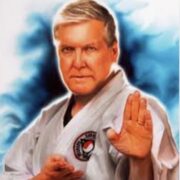

A black belt certifies what you can do. It says nothing about whether you can teach it. Grand Master Keith D. Yates, who has taught continuously for almost 60 years and lectured at university level, lays out how students actually learn, how to reach the four kinds of learner in every class, and what changes between a preschooler, a ten-year-old, a teenager and an adult over forty.
Key takeaways
- Rank is not teaching qualification. Most black belts have never studied how people learn.
- Students take in information in different ways: through words, through logic, through seeing and through doing. Build every class so all four get something.
- Match the material to the student’s stage of development. A preschooler, a ten-year-old and a teenager need different classes, not louder versions of the same one.
- Correct by telling students what to do, not what not to do. Explain it, demonstrate it, then have the student demonstrate it.
- Twenty years of experience can be one year repeated twenty times. Keep changing how you teach.
When new students sign up at their local martial arts school, they no doubt think the person wearing the black belt at the front of the class is a qualified instructor. After all, they are a black belt, and the black belt signifies a teacher, right?
Most black belts, hopefully, know that is not the case. So what do we, as senior teachers and school owners, do about it? Well, we hold “special black belt classes” on sparring, or on weapons, or on self-defense. That may help us become more physically skilled, but it does not help us become better instructors.
Some people are just better communicators than others. Remember the high school teacher who motivated you to study harder and make good grades? Remember the teacher who was so boring you had a hard time staying awake the whole class? And those were people who had college degrees in teaching! What about the average black belt instructor who never took a course in educational theory and who doesn’t even know what the word “pedagogy” means?
Let’s talk a little about how students learn, about how to communicate best, and how to become the motivating teacher you want to be.
What is pedagogy, and why should a black belt care?
Pedagogy is the science of teaching, sometimes referred to as “educational strategies.” As martial artists we are used to thinking in terms of strategies for a fight or a self-defense situation. Likewise, we must also have a strategic approach to our teaching methods and techniques.
In one article I can’t give you an entire education in “education,” but I can point out some of the major schools of thought on teaching methods and share some of my experiences in teaching both children and adults.
It should be noted that teaching pedagogies have changed in the last few decades because of the rapid advance of technology. While you can certainly watch various kata on YouTube or Google the history of your style, the actual process of learning a front stance or a reverse punch remains much the same as it has for hundreds of years.
But admittedly we live in a different culture today, not only from 16th-century Okinawa or Korea but from the 1960s, when many of the senior martial arts masters took their first lessons. So today’s sensei or sabeom must be able to relate to the modern student.
Some “traditionalists” may reject that thinking by saying, “It was good enough for me, so it is good enough for my students.” However, that ignores the fact that your instructor probably had absolutely no idea of proper teaching methodology. Witness the fact that many of the exercises we did in the “old days” have now been shown to be actually detrimental to proper physical education and conditioning (kicking without proper warm-ups and knuckle push-ups on a concrete floor, just to name a couple).
How do students learn? The four learning styles
People learn in different ways. Just as we prefer different clothing styles, managerial styles and music styles, we also feel more comfortable acquiring information in ways that fit our preferred “styles” of learning.
Harvard educator Dr. Howard Gardner proposed replacing the notion of one kind of intelligence (IQ) with several. Four of them matter most on the training floor:
- Linguistic (verbal, language oriented)
- Logical (a mathematical approach)
- Kinesthetic (using physical movement)
- Visual-spatial (visually oriented)
Knowing these preferred learning styles can help you choose a career, learn more effectively, or teach more effectively.
If you are a linguistic learner, you:
- like to read
- have a good memory for names, dates and trivia
- enjoy word games, puns and tongue twisters
- have a good vocabulary
- write well and communicate with others in a highly verbal way
If you are a logical (mathematical) learner, you:
- are curious about how things work
- mentally compute measurements and formulas
- enjoy logic puzzles, brain teasers and games of strategy, like chess
- look for rational explanations, think logically and seek logical answers
- feel more comfortable when something has been categorized, analyzed or quantified
If you are a visual learner, you:
- draw or doodle
- read maps and diagrams more easily than text
- can comfortably imagine how objects appear from different angles
- prefer reading material that is heavily illustrated
- enjoy jigsaw puzzles or mazes
If you are a kinesthetic learner, you:
- are physically active and enjoy sports and the outdoors
- find it difficult to sit still for long periods
- like working with your hands
- enjoy taking things apart and putting them back together
- have a need to touch things when learning about them
- need to practice skills by doing, not just reading
When you have identified one or two preferred modes of learning, use that knowledge to structure learning situations that favor your style.
For example, to learn a foreign language a linguistic learner might concentrate on vocabulary, using books and audio recordings; a logical-mathematical learner might put more emphasis on the rules of grammar; a visual learner would respond well to lots of illustrations, photos or videos; and a kinesthetic learner might decide to enroll in a total-immersion course abroad.
How do you teach a class full of different learners?
As a martial arts instructor you cannot be expected to know the learning style of every student in your class, but you can make your instruction broad enough that different students, with different ways of learning, can all benefit from your approach. Include some martial history in your class. Talk about where Tae Kwon Do came from. Teach students the meaning of the names of the patterns. Don’t just demonstrate the techniques yourself; let some of the students show their skills. Ask them to explain, in their own words, why we do things a certain way.
How do learning styles apply to children?

OK, how does this specifically apply to kids, who make up the majority of martial arts students?
- Language-oriented learner. Use word pictures: forward balance becomes the “railroad track stance,” back balance the “L-shape stance.” Tell stories, and encourage kids to share their own experiences back with you.
- Logical learner. Explain the whys and hows: if you do it this way, this will be the result. Conversely, if you do it the wrong way, this might happen.
- Visual learner. Demonstrate the techniques, not just yourself but also using other children who have more advanced skills. If they see another kid do it, they will be able to pattern themselves after the visual lesson.
- Kinesthetic learner. These kids learn physical techniques quickly. Help them position their bodies in the correct way. Interestingly, these children are often labeled with attention deficit disorder. Their success in learning physical skills can build their confidence and help them in a school classroom setting.
Is the material age-appropriate?
Some material is simply too advanced for preschoolers because of its abstract quality. Teachers must always take into account the maturity (physical as well as emotional) of their students and their cognitive development, meaning their ability to learn and solve problems.
The best-known theory of cognitive development was devised by Jean Piaget in the 1950s. Although advances have been made since then, his theories are still widely accepted.
Preschoolers (ages 3 to 6)
Piaget proposed that preschoolers operate at a “preoperational” stage of development. Their learning is concentrated on a self-centered view of the world. They are beginning to learn how to memorize things and how their actions have consequences. Note that preschoolers usually do not have the motor skills to participate in organized sports, although they will probably enjoy exercises that let them move like snakes, cats, kangaroos and airplanes. They may not yet be able to hop, throw or kick at objects. Physical exercises can improve these skills.
School-age children (6 to 12)
School-age children are at the “concrete operations” stage. They understand, or can begin to understand, the concept of permanence, and they are able to build on past experiences in order to learn. Note that before about age 10, most kids do not have the cognitive ability to understand the complex strategies required for sports competition. They want to have fun and to “win,” although they may not be able to figure out what it takes to win. Successful hand-eye coordination is usually, but not always, developed by age 9. During the elementary-school years children’s motor skills become much smoother and better coordinated. They can sit still and pay attention for longer periods, but class should still be active.
Adolescents (12 to 18)
Adolescents are at the “formal operations” stage of Piaget’s theory. They can understand pure abstractions and can apply information to adapt to specific situations. Note that puberty brings out both a desire to excel physically and a natural awkwardness. At this stage there is a greater difference between boys and girls in size and strength, and between early and late developers. Do not assume that a physically larger child has cognitive abilities beyond his chronological age just because he is tall.
Why does physical exercise matter so much for kids?
Studies have shown that physical education, which is what we do in martial arts, is important in the development of any child. It is associated with higher grades, better sleep habits, improved social skills, better self-esteem and lifelong fitness habits. With the great increase in childhood obesity, martial arts are a fun and beneficial way for children to learn these healthy habits. These are good things to remind yourself of, and to keep telling parents, so they understand the importance of practice in class and at home.
What are the fundamentals of teaching both kids and adults?

- Maintain eye contact.
- Smile in acknowledgment.
- Personal space: earn it.
- Give plenty of compliments.
- Use positive rather than negative reinforcement: “Do it this way” rather than “Don’t do it this way.”
- Set realistic goals to create confidence.
- Remember that not all students are equally coordinated.
- Define all terms.
- Use word pictures.
- Explain it, then demonstrate it.
- Have the student demonstrate.
- Note learning and gender differences.
- Find out what motivates a particular student (especially important for adults).
- Encourage feedback.
- Review lessons for better retention.
What changes when you teach older adults?

Older adults may have difficulty keeping up with younger students even though they want to. They must be reminded to “take it easy,” and more emphasis must be placed on proper warm-ups and cool-downs, with care taken during stretching exercises. It is recommended that anyone over the age of 40 have a physical exam before beginning any new exercise program.
How do you become the best teacher you can be?
The old saying “practice makes perfect” applies here. You may never be a perfect instructor, but you can become a much better one by continuing to teach, by noticing how your students respond to your instructional style, and by being open to modifying your approach when you learn something new.
There is a saying in educational circles that when some people say, “I’ve got 20 years of teaching experience,” what they really mean is, “I’ve got one year of teaching experience; I’ve just done it 20 times!” Don’t make the mistake of doing the same old thing over and over again.
I am more proud of the students I’ve taught and the lives I’ve affected than I am of any trophy I’ve won or the number of stripes on my belt.
Frequently asked questions
Does earning a black belt make someone a qualified instructor?
No. A black belt certifies technical skill. Teaching is a separate skill — knowing how people learn, how to communicate and how to adjust for age and ability — and most black belts have never been trained in it.
What is pedagogy in martial arts?
Pedagogy is the science of teaching. In a martial arts school it means having a deliberate strategy for how you present material, just as you would have a strategy for a fight or a self-defense situation.
What are the four learning styles an instructor should plan for?
Linguistic (learns through words and stories), logical (learns through cause and effect), visual (learns by watching) and kinesthetic (learns by doing). A well-built class gives each of them something: history and terminology, the reason behind a technique, demonstrations by the instructor and by students, and plenty of hands-on practice.
How should martial arts classes differ by age?
Preschoolers (3–6) need movement games and simple, concrete instruction. School-age children (6–12) can build on past lessons but generally cannot follow complex competition strategy before about age 10. Adolescents (12–18) can handle abstract concepts but vary widely in size, strength and maturity. Adults over 40 need more warm-up, cool-down and care in stretching.
What is the most common teaching mistake senior instructors make?
Repeating the same approach for decades. Twenty years of experience can turn out to be one year of experience repeated twenty times. Watch how students respond and keep adapting.
Dr. Keith D. Yates has been teaching continuously for almost 60 years. He served as an adjunct professor of communications at both Southern Methodist University and Dallas Theological Seminary, both of which he also graduated from. He has written over 500 magazine articles and authored or co-authored 17 books. He is the founder and president of the American Karate and Tae Kwon Do Organization (AKATO). This article is adapted from a chapter in the AKATO Handbook. More columns by Keith D. Yates.