
Your Martial Arts School Retention Rate Is the Only Metric That Matters

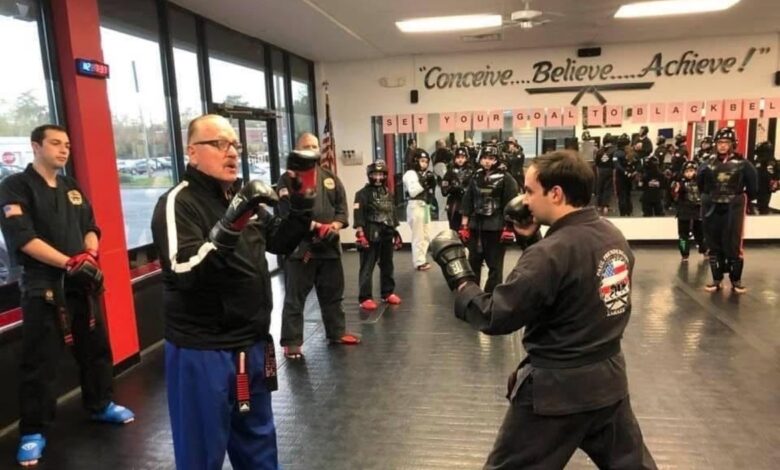
By Grand Master Jeff Smith — first in a twelve-part series adapted from Extraordinary Teaching, co-authored with Grand Master Stephen Oliver.
For fifty years, martial arts instructors have been grading themselves on the wrong exam.
They point at the sharpness of the uniforms. The height of the kicks. The trophy shelf by the front desk. And sooner or later one of them will look you in the eye and say, with real pride in his voice, “It’s so hard to get a black belt in my school. Almost nobody makes it.”
Every time I hear it I have to stop myself from shaking my head. Because listen to what that man just told you. He said: I am so ineffective at teaching, motivating and holding onto students that almost none of them reach the goal our entire art is built around. That is a confession dressed up as a standard.
Your martial arts school retention rate is the only metric that tells the truth about your school. Not your enrollment count. Not your gross last month. Retention.
Eight Years Versus Four Months
Think it through. If a student trains with you for eight years, then as long as you are a reasonably credible instructor, that student is going to get good. It is almost unavoidable. Time and repetition will do the work whether you are brilliant or merely competent.
Now run it the other way. If a student trains with you for four months, it does not matter if you are the finest grandmaster alive. They will learn almost nothing of lasting value. They quit, they forget most of it inside a year, the whole brief episode fades to the back of their mind, and every bit of potential you saw in them on day one is simply lost.
Which means the skill you should be measuring is not your ability to produce a beautiful side kick. It is your ability to keep a human being on the mat long enough for the art to do its work.
The Business Case: One Renewal Beats Six Enrollments
This is not only a philosophical point. It is the whole economics of your school.
The value of your school is not measured by how many new students you can attract this month. It is measured by the lifetime value of each student. And here is the number that should reorganize your priorities: one renewal into a Black Belt program is worth six to ten times a single new enrollment.
Do the arithmetic yourself. A new student on a basic program might spend three or four thousand dollars with you over a year. A student who commits to a four- or six-year Black Belt Leadership program will spend somewhere between twenty and thirty thousand dollars across that journey.
Which of those two students would you rather have? It isn’t a hard question. But notice what it implies — you cannot have the second student without first mastering retention. The renewal is not a sales event you get good at. It is the natural consequence of a student still being there, still motivated, still moving, three years in.
Know Your Student Value
The number I want in front of you every month is student value: your total gross revenue for the month divided by your number of active students.
Two warnings on that calculation. First, be honest about “active.” Do not count students who are on the books but have not been seen in six weeks. You are not fooling the bank and you should not be fooling yourself. Second, do not use your rate card. Use what actually came in.
Most schools that come to us for help are sitting at a student value around $125 or $150. The schools running seven figures are at $300, $400, and some are past $500. The gap between those two groups is almost never talent. It is two things: keeping students enrolled longer, and offering upgrade paths worth wanting.
The Instructor Report Card
We grade instructors on one number: monthly dropout rate — the percentage of active students who leave in a given month. Here is the scale, and I would encourage you to work out where you actually fall before you read the next section.
- The “A” Instructor — 1 to 2%. A master of connection, motivation and teaching. Their school is not a class; it is a community. Students would feel a loss leaving.
- The “B” Instructor — 3 to 4%. Good. But there are leaks in the boat. They are losing students they did not have to lose, and usually they cannot tell you which ones or why.
- The “C” Instructor — 5 to 6%. The danger zone. The school has become a revolving door, and the owner is on an exhausting permanent treadmill of new-student acquisition just to hold even.
- Anything worse is an F. At that point you do not have an instruction problem. You have a crisis. The school is hemorrhaging, and no amount of marketing will fix it.
That last line deserves emphasis, because it is where most owners spend their money exactly backwards. If you are losing six percent a month, buying more leads is pouring water into a bucket with the bottom out. You will spend more, work harder, and stand still. I have watched owners do it for years.
Run Your Own Numbers Before Next Month
Three figures. Half an hour with your records. Do it this week.
- Your true active count. Students who physically attended at least once in the last thirty days. Not your billing list.
- Your student value. Last month’s gross divided by that active count.
- Your monthly dropout rate. Students lost last month divided by your active count at the start of the month. That is your grade.
Most owners have never calculated the third number in their careers. They have a feeling about it. A feeling is not a number, and you cannot manage a feeling.
What the “A” School Actually Feels Like
Everything I am going to write about in this column over the coming year is built to move you toward that 1-to-2% number. It is about creating a place students do not want to leave. Where parents see so much value at home — in the homework, the manners, the confidence — that they refuse to let the child quit. Where the path to Black Belt is laid out so clearly and so compellingly that continuing feels like the obvious thing and stopping feels strange.
So let us retire the old thinking for good. The best instructors are not the ones with the toughest students and the thinnest black belt ranks. They are the ones who can take any student — gifted or clumsy, bold or painfully shy — and walk that person all the way to Black Belt and past it.
That is the real art. Everything else is decoration.
Next month: why the physical attendance card beats every piece of software you own — and how it tells you a student is leaving weeks before their payment fails.
Grand Master Jeff Smith is the first PKA World Light-Heavyweight Kickboxing Champion and a seven-time world champion who retired 21-1. He earned his black belt under Grand Master Jhoon Rhee in 1969 and served as Senior Vice President of the Jhoon Rhee Institute from 1970 to 1985. From 1980 to 1990 he coached the WAKO United States team to ten consecutive world titles. He is Chief of Instruction for Mile High Karate and co-author, with Grand Master Stephen Oliver, of Extraordinary Teaching. Read more from the Martial Arts Professional columnists.