Mike Anderson, c. 1942–2026: The Promoter Who Built the Arena for Modern Sport Karate
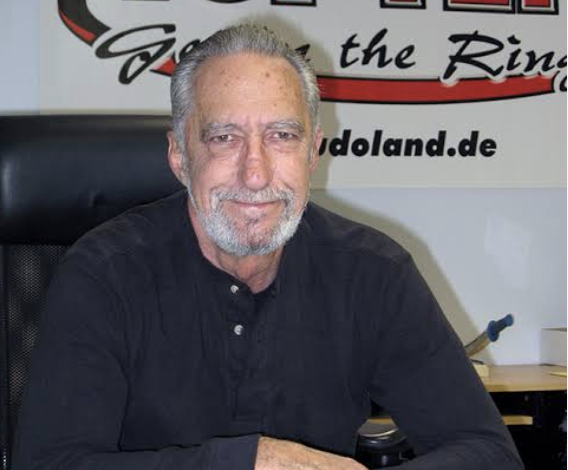
Mike Anderson helped turn American tournament karate from a patchwork of regional events into an organised sport, and then helped push it into the ring and onto network television. Rankings, foam sparring gear, prize money, televised full-contact title fights and an international sanctioning body all passed through his hands in the space of about six years. He died on 18 September 2026, aged about 84. Most competitors who strap on hand and foot pads this weekend will never hear his name. They are competing in a structure he helped build.
Disclosure. Mike Anderson’s death was confirmed to Martial Arts Professional by Grand Master Jeff Smith, who won the light heavyweight title at Anderson’s 1974 World Professional Karate Championships. Grand Master Smith is Chief of Instruction for Martial Arts Wealth Mastery, which was founded by Stephen Oliver, the publisher of this magazine. The reported sections below are sourced to the published record, and the places where that record disagrees with itself are named at the end.
- Name
- Mike Anderson
- Born
- c. 1942 (a March 2026 fundraiser for his care gave his age as 84; exact date and place not published)
- Died
- 18 September 2026
- Trained under
- Allen Steen, Dallas, from 1961, in the Jhoon Rhee system of taekwondo
- Known for
- Top Ten Nationals (1971); Professional Karate magazine and its national ratings; the World Professional Karate Championships, Los Angeles, 14 September 1974; co-founding role in the Professional Karate Association and in WAKO
Dallas, then Germany
Anderson began training in 1961 at Allen Steen’s school in Dallas, the Texas root of the Jhoon Rhee lineage that produced a remarkable share of the first American tournament stars. Steen promoted him to first-degree black belt in 1964, and General Choi Hong Hi awarded him second degree the following year, according to the Martial Arts Encyclopedia at BackKicks.
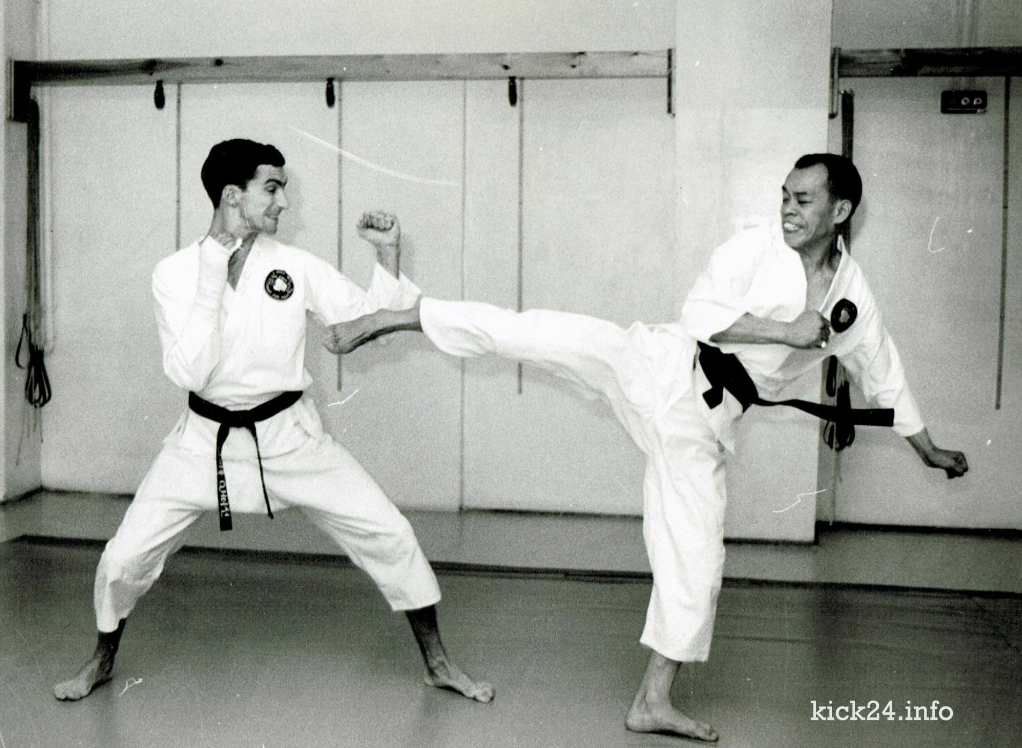
Much of the 1960s he spent in Germany as an American serviceman. Published biographies credit him with founding a German-Korean Taekwondo Association in 1964, promoting a free-sparring tournament in Garmisch-Partenkirchen, twice winning the U.S. Armed Forces karate championships and four times winning the All-European Open. USAdojo reports that South Korea’s President Park Chung Hee awarded him a gold medal for spreading taekwondo in Europe; we have not found an independent record of that award. He came home in 1969 with something few American karate men had: working relationships on both sides of the Atlantic.
The scoreboard: rankings and the Top Ten Nationals
The American tournament scene Anderson returned to had talent and almost no structure. Rules changed from event to event. Nobody could say with authority who the best fighters in the country were. Prize money was rare.
Anderson attacked the problem from two sides. In 1971 he created the Top Ten Nationals, which by the mid-1970s was one of the handful of major national events on the circuit. And he began publishing Professional Karate magazine, which ran a regular national Top Ten rating of tournament competitors. A fighter could now build a season, a reputation and a national name, not just win a Saturday.
At the 1973 Top Ten Nationals in St. Louis he made Jhoon Rhee’s foam Safe-T hand and foot equipment part of the rules. Anderson did not invent the gear; Rhee did. What Anderson did was mandate it at a major national event, and that is the step that turned an interesting product into a standard. The semi-contact point fighting practised in tournament halls today descends directly from that decision.
14 September 1974
The event that fixes Anderson’s place in the history books took place at the Los Angeles Sports Arena on 14 September 1974. The World Professional Karate Championships, which he produced with Don and Judy Quine, abandoned the stop-and-score format for continuous full-contact fighting in protective gear, with knockouts allowed, and it was broadcast on ABC’s Wide World of Entertainment.
Four world champions were crowned: Joe Lewis at heavyweight, Jeff Smith at light heavyweight, Bill “Superfoot” Wallace at middleweight and Isaias Duenas at lightweight. Out of that night came the Professional Karate Association, the Quines’ organisation, founded, in Wikipedia’s account, “in association with Mike Anderson.” For the next decade the PKA was American full-contact karate, and its televised bouts made Wallace, Smith and their successors household names among martial artists.
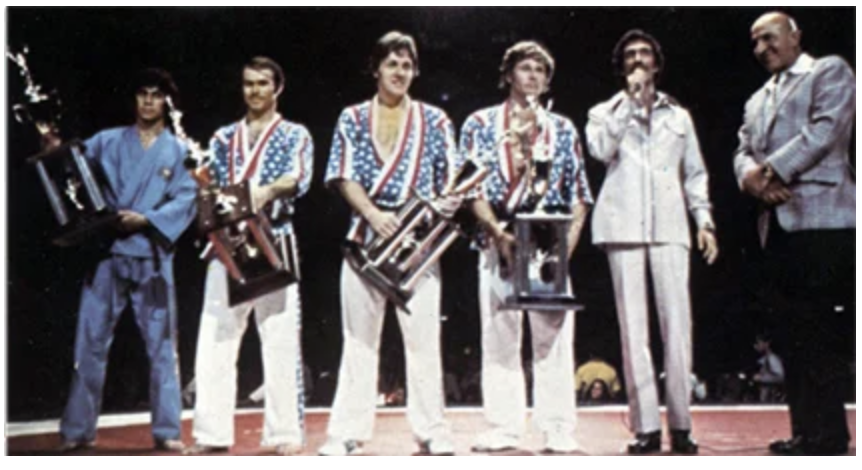
For this magazine the connection is personal. Jeff Smith was a Jhoon Rhee student from Washington, D.C., and the title he won that night anchored a career that made him one of the defining American martial artists of his generation. That championship did not happen by itself. Somebody had to rent the arena, write the rules, and persuade a network that people would watch karate. Anderson was one of the people who did.
Taking it to the world: WAKO
Anderson’s European years paid off in the second half of the decade. In 1974 he and the German promoter Georg Brückner brought the first U.S. karate team to Europe, and in 1977 the two men were behind the creation of the World All-Style Karate Organization, known today as the World Association of Kickboxing Organizations. WAKO’s own history says Brückner and Anderson “had the vision” for a global body. In 1979 Anderson promoted WAKO’s second world championships in Tampa, Florida.
WAKO is now the largest international kickboxing federation and holds Olympic-movement recognition. Anderson thereby sits at the root of both branches of the sport: American professional full contact and international amateur kickboxing.
He went on to publish Main Event magazine and, by his own biography’s count, to produce or direct more than a hundred major events in twenty-five countries on four continents.
What a school owner should take from Mike Anderson
Anderson’s core insight was not about fighting. It was that people keep showing up for things they can measure. Before his ratings, a tournament win was a trophy and a Monday. After them, it was a step toward a national ranking, and competitors planned whole years around the chase.
That is exactly the problem a school owner faces at month three of a student’s membership. A student who can see where they stand and what comes next stays; a student who is simply “training” drifts. Belt testing does part of that work. Visible progress boards, internal tournaments, a published leaderboard for attendance or skills, and events that give a season its shape do the rest. Anderson built a scoreboard for a whole sport. Most schools have not built one for their own mat.
The second lesson is about standards. Safe-T gear existed before Anderson; it became universal because a major event made it mandatory. If something in your school should be non-negotiable, whether a safety rule, a curriculum standard or a parent-communication policy, it only becomes real once it is written into the rules.
Photographs
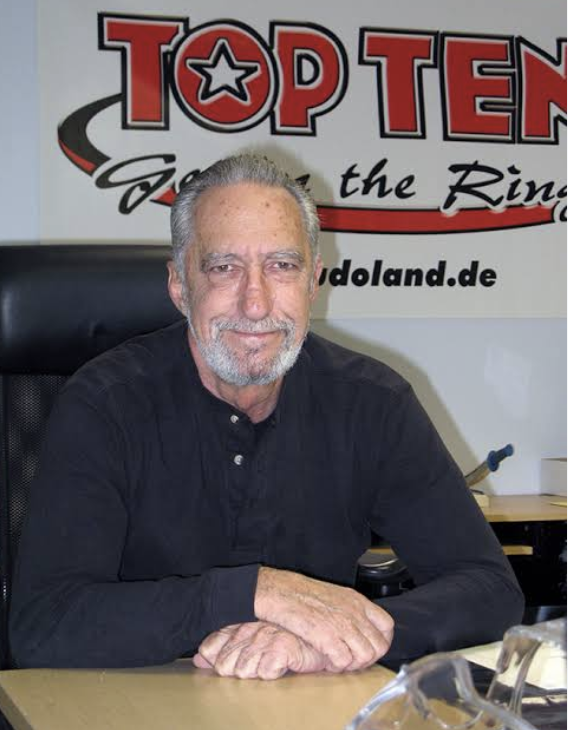
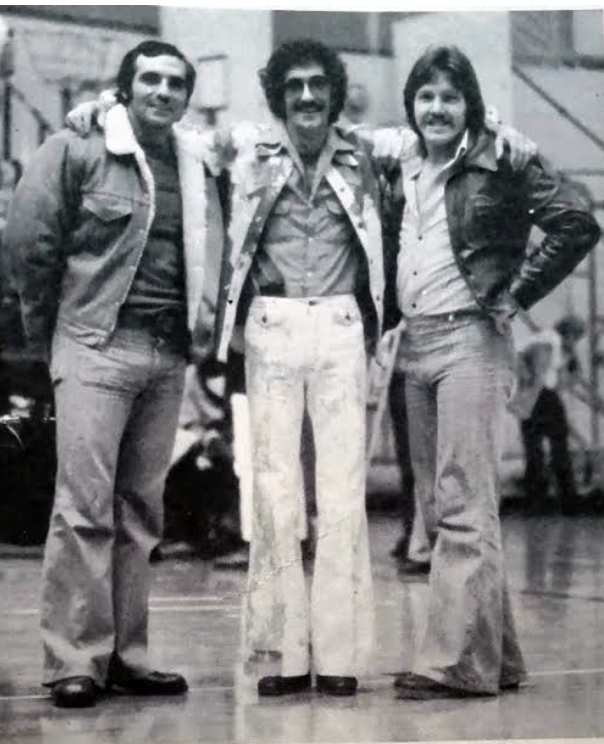
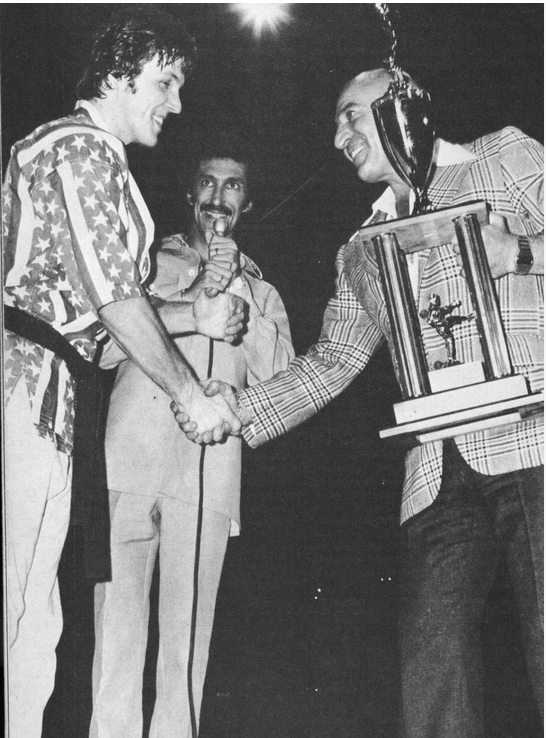
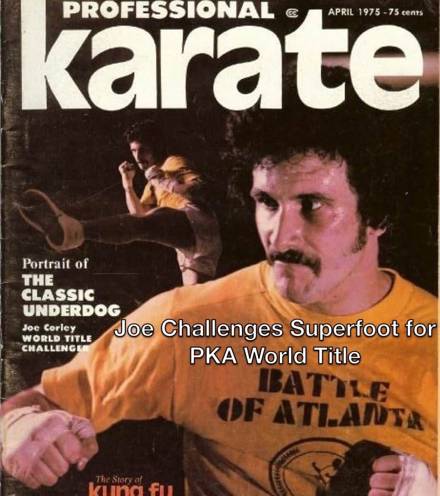
A tribute from Joe Corley, PKA Worldwide
All of us in the leadership of PKA WORLDWIDE were deeply saddened by the passing of our friend, Mike Anderson.
Those of us who knew Mike well appreciated his remarkable intensity, drive, and determination. When he got something in his mind, he did not merely talk about it—he went about making it happen.
When my telephone rang at some very unusual hour—very late at night or very early in the morning—I often knew it would be Mike. Our conversations could continue for hours as we talked about the martial arts, full-contact competition, publications, television, and what the future might hold.
Mike was a doer, a creator, and a visionary.
None of us gathered at the Los Angeles Sports Arena on September 14, 1974, could have foreseen where that historic night would eventually lead. We did know that we were witnessing something very special as four extraordinarily skilled and charismatic world champions were crowned before a national television audience on ABC’s Wide World of Entertainment.
I was still recuperating from spinal surgery at the time, but Mike invited me to serve as one of the ringside judges. I believed that this new full-contact format could offer an exciting future for me and many other martial artists—but I could not possibly have imagined the many different paths that would grow from that one unforgettable night.
And who could have known that Mike’s magazine, Professional Karate, and its gifted editor would bestow upon me the nickname “Gentleman Joe”—a name that has remained with me throughout the decades?
Mike helped give martial artists a platform, recognition, and a larger vision of what our sports could become. So many competitors, instructors, promoters, writers, photographers, and fans benefited from his timely and pioneering contributions.
Thank you, Mike, for your original vision; for your influential publications; and for everything you brought to the great martial arts of karate and tae kwon do—as well as to the sport originally known as “full-contact karate,” which the world would come to know as kickboxing.
You will always be remembered as a unique, intelligent, determined, and driven visionary. Your influence will continue to be felt, and your contributions will be appreciated by generations of martial artists and global stars for lifetimes to come.
We extend our heartfelt condolences to Mike’s family, friends, and the countless people whose lives he touched.
With gratitude and respect—from the Corley family, Joe, Christina, and Christiana, and from all of us at PKA WORLDWIDE:
God bless you, Mike.
Rest in peace, Mike Anderson.
— Joe Corley
President, PKA Worldwide
A tribute from Grand Master Jeff Smith
We lost a great Martial Artist today. Condolences to the family and friends of Mike Anderson. One of the True Pioneers in the Martial Arts. We all owe him a debt of gratitude helping build our Martial Arts to become a Worldwide Sport of where it is today!
— Grand Master Jeff Smith
Light Heavyweight World Champion, World Professional Karate Championships, Los Angeles, 1974
Remembering Mike Anderson
The history of martial arts is usually told through its champions. It should also remember the people who built the arenas those champions fought in. Anderson was part publisher, part promoter, part rule-maker and part showman, and he was unusually willing to move an idea from argument into actual competition. Not every experiment worked, and none of these changes was the work of one man; Rhee, the Quines, Brückner and many others built alongside him. But few people touched as many of the pieces, in so short a time, as he did.
In his last months, a public fundraiser was organised to pay for his hospice care, and the martial arts community he helped build answered it.
Sources, and what we could not confirm
An exception to our own standard, stated plainly. Our published practice is to confirm a death from a named obituary, a funeral record or a major outlet before we write. At the time of publication no public obituary for Mike Anderson had appeared. His death was confirmed to us directly by Grand Master Jeff Smith, and we are publishing on that first-hand notice. We will add the family’s obituary, the place of death and any survivors the family chooses to name when they are published.
Primary sources: the Martial Arts Encyclopedia entry at BackKicks.com for his training, ranks, German years, the Top Ten Nationals, the St. Louis Safe-T gear introduction, the 1974 U.S. team tour, WAKO and the Tampa championships; the USAdojo.com biography “Mike Anderson: Father of Sport Karate and Kickboxing”; the World Association of Kickboxing Organizations’ own history; Wikipedia’s articles on the Professional Karate Association and on WAKO for the 1974 date, venue, broadcast and champions; and the March 2026 GoFundMe campaign “Care for Mike Anderson, Kickboxing Legend,” which gave his age as 84 and stated that he was in hospice.
Date conflicts we have printed rather than smoothed over. Professional Karate magazine is dated to 1972 by USAdojo and to 1973 by BackKicks. The founding of the PKA is dated 1972 by USAdojo, 1974 by Wikipedia and 1975 by BackKicks; we follow 1974, the year of the championships from which it grew. WAKO’s own history says it was founded in Berlin on 26 February 1977 by Georg Brückner, crediting Anderson with a share of the vision; Wikipedia names both men as founders and records its registration in Zurich.
Contested: the WAKO presidency. BackKicks states that Anderson was WAKO’s first president, serving from 1977 to 1987. WAKO’s own history records Ennio Falsoni leading the organisation from 1984. Both cannot be fully correct, and we have not stated a presidential tenure in the body of this profile.
Promotional or single-source claims. The Park Chung Hee gold medal, the Armed Forces and All-European titles, the count of more than a hundred events in twenty-five countries, and USAdojo’s statement that he called the 1975 “Thrilla in Manila” broadcast with Bob Wall come from promotional biographies and are attributed rather than asserted. BackKicks gives the 1974 Los Angeles crowd as 15,000; we have not found a second source and have left the figure out of the body. His exact date and place of birth are not published; “c. 1942” is derived from the age given in March 2026.
Photographs are from the publisher’s collection, and the people in them are identified as supplied. The photograph of Anderson with Jhoon Rhee carries a kick24.info watermark. The April 1975 Professional Karate cover was supplied with Joe Corley’s tribute. Photographers and copyright holders have not been established. We are glad to add a credit or remove an image on request.
The tributes from Joe Corley and Grand Master Jeff Smith are published as they supplied them, in their own words; only the typography has been set to our style.
Cause of death and survivors have not been made public by the family and are not reported here.
Corrections. See our editorial policy. If you knew Mike Anderson and can add to or correct this record, we want to hear from you.