
Three Trips to West Point, and the 200-Year-Old Teaching Method Nobody Brought Home

Martial arts school owners have been taken to the United States Military Academy at West Point three times in the last fourteen years to study leadership. They came home with leadership material. What almost nobody brought home was the Academy’s actual teaching method — which is two hundred years old, entirely transferable, and a better description of a well-run martial arts class than anything in the industry’s own literature.
Disclosure. The meetings described here were run by this magazine’s publisher, Stephen Oliver, for Martial Arts Wealth Mastery and its predecessor NAPMA member programmes. The record of them comes from that programme’s own member archive.
The three visits
| Year | What is on the record |
|---|---|
| 2012 | Inner Circle and Peak Performers live mastermind at the Academy. A primer was circulated to members in May 2012 — “Leadership Lessons from West Point,” an orientation to the Academy itself, and an outline of the five levels of leadership. Follow-up material went out that July. |
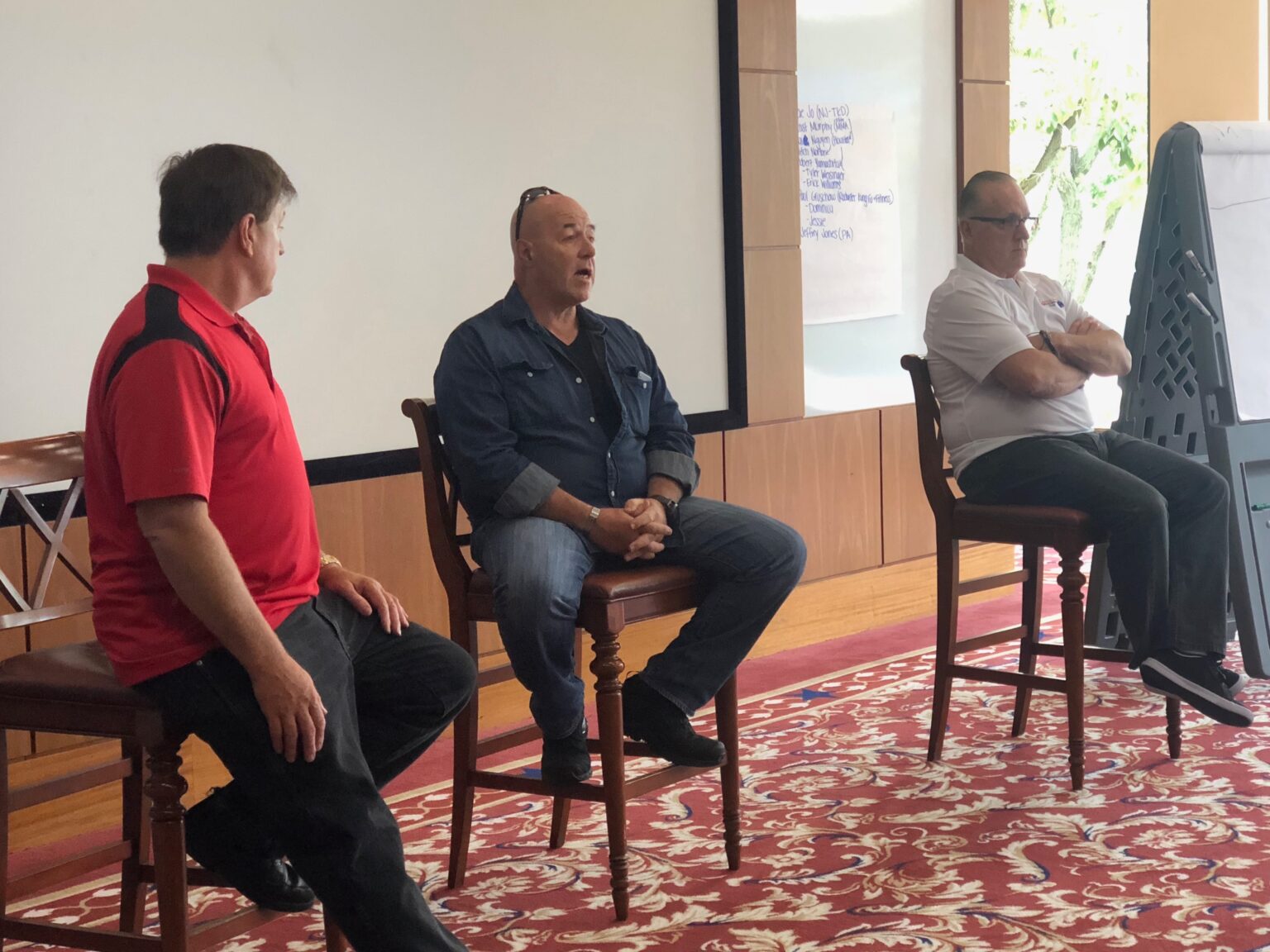
| 2014 | The West Point Meeting. Session video, audio and photographs were posted to members in November 2014. |
| 2018 | A Martial Arts Wealth Mastery leadership event at the Academy in August, with Bernard Kerik among the speakers. |
Three visits, a decade apart at the ends, all built around the same premise: that an institution which has been manufacturing leaders since 1802 knows things a martial arts school owner does not.
That premise is correct. It is just that the industry consistently took the wrong lesson home.
The lesson everybody took
Leadership, in the sense the seminar industry means it. Levels of leadership, the duty-honour-country frame, the parade ground, the long grey line. It is genuinely moving material and it is genuinely useful, and school owners came back energised by it.
It is also, as content, widely available. There is an entire publishing industry in leadership-lessons-from-West-Point. Nothing about standing on the parade ground gives a school owner something a book would not.
The lesson almost nobody took
In 1817 a 32-year-old engineer named Sylvanus Thayer became Superintendent of the Military Academy. He held the post until 1833 and rebuilt the institution so thoroughly that he is still called the father of the Military Academy. The teaching system he installed carries his name and is still in use at West Point today.
The Thayer Method rests on three rules that will sound uncomfortably familiar to anyone who has thought hard about running a martial arts class.
One: the student prepares before the lesson, not during it. The cadet arrives having already worked through the material. Class time is not for transmission. It is for demonstration and correction.
Two: every student performs, every day. Not the keen one. Not the one who raises a hand. Every cadet, in every session, is expected to get up and work the problem at the board in front of the section.
Three: every student is assessed, every day. Daily graded recitation. The instructor knows where each person stands continuously, not at the end of a term.
Sections are kept small enough to make all three possible. That is the whole system.
Why that is a martial arts class
Read those three rules again as a description of the mat.
A martial arts class is already the ideal Thayer environment and most schools waste it. The physical form of our teaching — everybody moving at once, in a room, watched by an instructor — is precisely the daily recitation Thayer was reaching for. We have the structure by default. What we usually lack is the discipline of the second and third rules.
Watch an ordinary class honestly and you will see the failure. The instructor demonstrates. The class copies. The instructor walks the floor and corrects three or four students, usually the same three or four, because they are at the front or because they are struggling visibly. Twenty other people perform the technique thirty times each without a single individual correction, and go home having practised their errors into permanence.
Every student performed. Nobody was assessed.
And the first rule — preparation before the lesson — is the one the industry has essentially abandoned. Home practice is mentioned, encouraged, occasionally put on a chart for children. It is almost never the basis on which class time is designed. If it were, the class would not open by teaching the material; it would open by testing it.
What a school owner should take from this. Three changes, none of which costs anything.
Assess somebody every single class. Not a formal grading — a deliberate, recorded judgement. Pick eight students per class, name them in advance on your lesson plan, and make sure each one gets a specific individual correction before they leave. Rotate so that across a fortnight everyone has been genuinely looked at. Write down what you saw. That single habit converts a room of people exercising into a class of people being taught.
Assign preparation and then test it. Give the class one thing to work on before the next session and open the next session by asking for it. The first three weeks will be dispiriting. That is information about how much of your curriculum has been travelling on class attendance alone.
Shrink the section, not the class. Thayer’s rules need small groups. You do not need smaller classes to get them — you need the class broken into sections with a senior student or assistant accountable for each, which is also the cheapest instructor-development programme available to you.
The honest caveat
Thayer’s system was designed for a coercive institution. Cadets cannot quit on a Tuesday because they did not enjoy being corrected in front of their peers. Your students can, and children’s parents will help them.
So the method transfers but the tone does not. Daily assessment delivered as public judgement will empty a commercial school. Daily assessment delivered as individual attention — the instructor who reaches every person by name with one specific thing — is the single most reliable retention mechanism this industry has, and it is the same mechanism. The difference is entirely in the delivery.
That is the thing worth carrying down from the Hudson. Not the parade ground. The seating plan.
Frequently asked questions
What is the Thayer Method?
The Thayer Method is the teaching system installed at the United States Military Academy by Sylvanus Thayer, who was Superintendent from 1817 to 1833 and is known as the father of the Military Academy. Its three principles are that the student prepares the material before class, that every student performs in every session rather than volunteering, and that every student is assessed daily. Sections are kept small enough to make this possible, and the method is still in use at West Point.
How does the Thayer Method apply to teaching martial arts?
A martial arts class already has the physical structure the method requires — everyone performing at once, in a room, in front of an instructor. What most classes lack is the second and third principles: individual assessment of every student on a rotation, and home preparation that class time then tests rather than replaces. Adopting them costs nothing and requires no change to curriculum.
Should martial arts schools copy military training?
Selectively. The transferable parts are published standards, daily individual assessment, and treating instruction as a separate qualification from skill. The part that does not transfer is coercive tone: cadets cannot quit mid-course and commercial students can. Daily assessment delivered as public judgement empties a school; the same assessment delivered as individual attention is a retention mechanism.
Sources
Primary sources: the NAPMA and Martial Arts Wealth Mastery member archive for the 2012 primer and follow-up material, the November 2014 West Point meeting recordings, and the photographic record of the August 2018 event; and the published history of Sylvanus Thayer’s superintendency, 1817–1833, and of the instructional method that carries his name.
What we have not claimed. The member archive records the existence and dates of the three meetings and the titles of the material circulated. It does not contain a session-by-session agenda, so this article does not claim to summarise what was taught at any of them. The Thayer material here is drawn from the published record of the Academy’s teaching method, not from the meetings.
Corrections. See our editorial policy.