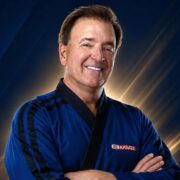

Grand Master Jhoon Rhee built one of the best-known martial arts businesses in America by deliberately becoming a celebrity in his own city. He combined paid advertising with constant public relations: a publicist who sat in on staff meetings looking for weekly story ideas, and instructors who reported what they were doing in the community so it could be pitched to local newspapers and TV. For school owners in 2026, the lesson is that local fame drives enrollment, while national trade-press coverage now has a different job: a credible source that search engines and AI tools use to judge who you are.
Most school owners know Jhoon Rhee as the “Father of American Taekwondo” and the man behind the “Nobody bothers me” television commercials in the Washington, D.C. market. Fewer know how systematically he worked on publicity. At the October 4, 2026 Martial Arts Wealth Mastery “Million Dollar School” session, Grand Master Stephen Oliver, who earned his black belt under Jhoon Rhee in 1978, and presenters who worked inside the Rhee organization described how that system worked and why it’s newly relevant.
How did Jhoon Rhee become a celebrity in Washington, D.C.?
Grand Master Oliver described Rhee’s insight as twofold. Rhee “figured out early on that he should be a celebrity in Washington, D.C.,” and he attached himself to every celebrity he came across. He became a local celebrity through two channels at once:
- Paid advertising. His television commercials made his name and face familiar across the region.
- Constant public relations. According to the presenters, his schools earned coverage in the Washington Post and the Washington Times and on the local ABC, CBS and NBC stations.
Advertising bought attention. Publicity earned credibility. Rhee used both together, year after year.
What did Jhoon Rhee’s publicist actually do?
Over the years Rhee worked with two different PR people. One of them, a publicist named Arnold, came to staff meetings and listened to everything being discussed, looking for ideas for articles every week. That detail stands out: the publicist was part of the operating rhythm of the business, not an outside vendor called in for a press release once a year.
The instructors had a role too. As one presenter who taught in the Rhee organization recalled, the staff’s job was to tell Arnold what they were doing in their communities so he could get it into the papers. A school demonstration, a student’s achievement, a community event: each was potential news, and someone was responsible for collecting it.
Why does local fame matter more than national magazines?
For enrollment, local recognition is what moves families. Grand Master Oliver’s point was blunt: being in the print edition of a national martial arts magazine does little to bring local parents through your door. Those readers are martial artists around the country, not families in your neighborhood. Coverage in the local paper, on local TV or in a community newsletter reaches the people who might enroll.
One presenter summed up the goal: “Anytime anybody thinks martial arts, you want them to think your name,” not the generic school they drive past.
Grand Master Oliver admitted he didn’t always follow Rhee’s approach. After leaving, he did the opposite for a while, “until I realized how brilliant it was.” Chief Master Greg Moody, Ph.D. compared it to the student who leaves a school and does the reverse of what they were taught, before coming back around. Many owners hold back for a different reason: talking about themselves feels like bragging. Rhee didn’t see it that way. Publicity was part of the job.
What has changed in the age of AI search?
National trade coverage has a new purpose. Grand Master Oliver explained that an article in a credible national publication, such as Black Belt or Martial Arts Professional, still won’t be read by many local prospects, but it now works as a link back to your school and a credibility signal from an independent source. Search engines and AI models weigh those signals when deciding which schools and instructors to trust and recommend.
So the modern version of the Rhee model has two layers:
- Local publicity for enrollment: local press, community organizations, school partnerships and visible service.
- Independent credibility for search and AI: trade-media articles, association and hall-of-fame write-ups, and consistent biographical information across the web.
Grand Master Oliver also suggested asking your association’s website to publish write-ups on you and your school, and encouraging member schools to link to and mention one another positively.
How can a school owner apply the Rhee model today?
- Assign someone to collect stories every week. It can be the owner, a staff member or an outside publicist, but someone owns it, as Arnold did.
- Make it part of the staff meeting. Ask every instructor what happened in the community this week that’s worth sharing.
- Pitch local outlets first. Neighborhood papers, community newsletters, local TV and school-district communications reach the families you want.
- Build your independent record. Trade-media coverage, association pages and consistent bios support how search engines and AI tools describe you.
- Keep paid advertising running alongside it. Rhee’s model was both, not either.
For practical tactics, see how to use low-cost public relations to become a celebrity in your community and using press releases to attract free media attention. To hear Rhee in his own words, listen to this archive interview with Grand Master Jhoon Rhee.
Frequently asked questions
How did Jhoon Rhee market his martial arts schools?
He combined paid television advertising with constant public relations. According to presenters at the October 2026 MAWM session, a publicist attended his staff meetings looking for weekly story ideas, and instructors reported community activities so they could be pitched to Washington-area newspapers and TV stations.
Does being featured in a national martial arts magazine help a school get students?
Not directly. Local prospects rarely read national trade publications. However, Grand Master Stephen Oliver notes that such coverage now provides a credible link and an independent source that search engines and AI tools use to evaluate a school.
How can a martial arts school owner get local media coverage?
Make someone responsible for collecting community stories every week, ask instructors for news at staff meetings, and pitch local papers, community newsletters and local TV before national outlets.
Why do AI tools care about third-party articles?
AI models and search engines give more weight to information from independent, credible sources than to what a business says about itself. Trade-media articles and association write-ups help establish who an instructor or school is.