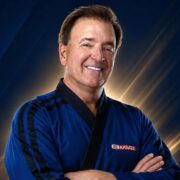
Jean Claude Van Damme: Inside the Mind of the Jean Claude Van Damme
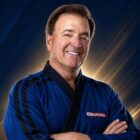

Jean Claude Van Damme — Inside the Mind of the Jean Claude Van Damme
A personal interview with the international film star and martial artist. His surprising successes as a school owner and his suggestions for your continuing success in the Martial Arts School Industry.
Listen to the interview
This interview was conducted for Martial Arts Professional, the trade magazine the National Association of Professional Martial Artists has published since 1996, and appeared in the magazine’s interview series. It is republished here as part of the magazine’s archive. The original recording date is not stated in the surviving archive record.
Browse the full interview archive
Full transcript
Transcript generated from the original recording and lightly edited for readability; minor errors may remain.
Today we have with us a true legend of the martial arts and one of the most recognizable action film stars in the world. I’m referring to the one and only Jean-Claude Van Damme. But before we begin our interview, I’d like to give you just a little bit of background information on our very special guest. For starters, he was born Jean-Claude von Varenberg in Sint Agatha, Belgium in 1960. By the age of 12, Jean-Claude began his lifelong study of the martial arts. What’s interesting is that some of his critics claim that he’s not a true black belt or even a martial artist. Let me tell you, that is absurd. Nothing could be farther from the truth. As you’ll hear in a moment, Jean-Claude is as real a martial artist as they come. In fact, he came up through the ranks in a very tough military-like school under an old school instructor by the name of Claude Goetz.
Read the full transcript
As a young black belt, he fought on the Belgium karate team and eventually won the European Professional Karate Association’s Middleweight Championship. What’s also interesting is that Jean-Claude actually owned his own martial arts school. Located in Belgium, it was called the California Gym. In 1982, he moved to Hollywood, California to pursue his dream of becoming an action star. Then, as chance would have it, with nothing more than $5,000 in his bank account, he landed the lead role in the classic martial arts film, Bloodsport. This was the critical turning point in his career and when his wildest dreams would fast become realities. Jean-Claude’s superb athleticism, attained through years of karate, ballet, and bodybuilding training, has made him an acclaimed international action star. He now has 28 films under his belt. Kickboxer, Lionheart, Double Impact, Cyborg, Universal Soldier, and The Quest, just to name a few.
Ladies and gentlemen, the martial arts industry truly owes a lot to today’s guest. Why?
Because his martial arts movies have been seen literally by millions of people around the world. His picture-perfect martial arts moves and his charismatic persona have surely inspired more people than we’ll ever know to say, hey, that martial art stuff is really cool. Wow, I’d love to be able to do that. I wonder, where do these people end up?
Well, perhaps they ended up training at your martial art school. So, NAPMA members, that having been said, please enjoy this exclusive and rather unique interview with the Muscles from Brussels, the legendary Jean-Claude Van Damme. Thank you. Welcome guys. It’s really great to have you here with us today. Thanks for giving us the time. Now I want to go ahead and begin this interview. Your movies have resulted in countless thousands of people enrolling into martial arts schools. Do you feel that your movies are still having the same effect on the public?
This is a very interesting question. First of all, my first movie was, as you know, may not know, Bloodsport, right?
Correct. So I made a bunch of movies like Bloodsport and Kickboxer, those martial arts movies, which I believe help a lot of people to go into martial arts. Today those movies are playing on TV so they are they may touch a new generation of people. Years ago Bloodsport and Kickboxer movies like that did something for the martial arts. Today I don’t know. Well I know as a student myself and a bunch of the other black belts we went and saw Kickboxer that time many years ago and we were just so inspired I mean everybody went back to the school and tried to be like Jean-Claude Van Damme. So I would venture to say that your movies are still having that same effect on the public today. I don’t doubt it for a second. Let’s chat for a moment about Jean-Claude the martial artist.
[04:14] In fact, you’ve become one of the most prolific martial arts movie stars of all time. When and where did you begin your training in the martial arts?
Oh, I start martial arts in fact Karate at the age of around 11 years old and I found a school in Brussels. That’s why by the way people are calling me the muscles from Brussels. But when I was 11 years old I was not really the muscles of Brussels. I was just that very common kid. not too strong physically and which by the way was an advantage because I was not that strong physically I was able to push a lot on the stretching I became very flexible I was not flexible to start with and because I was having a great admiration at that time at the age of 11 of all those comic books, the Marvel comics. I was very impressed with the anatomy. So I decided then on my own to also train and my chance, my luck was, near my karate school, it was a room full of weights.
No. bodybuilding at that time was very new too in Brussels. So I decided to buy some books of weightlifting. And I respect the image of those books. I was trying to copy, in a sense, all the movements of how to get on some chest biceps. And I was training them from the karate to going next door the bodybuilding room and I became day by day more and more strong and also I did a lot of stretching and maybe that’s why I became so good because I was working very hard to become that you know. And who was your first instructor?
Oh for weightlifting. For martial arts? Oh martial arts his name was Claude Goetz. He’s a Belgian fellow, wonderful man. And his gift to me was not only being a good teacher, but also he was very good to his students. He gave a lot of respect. He gave a lot of love to his students. He trusts them. And he built them very strongly mentally. And I truly believe the mental part of a man, a child, is the most important weapon to become something. I do. Now, the martial arts industry has evolved tremendously over the years and the infamous dungeon dojos are disappearing. Please describe for us what the martial arts classes were like way back when you first started your training. It was like, you know, when you saw the old cars?
It’s the same like when the pioneer of karate, it came first from Japan to Belgium. The wave of all those masters came from Japan. Like in Belgium, for example, was one guy called Miyazaki. My teacher his name was Claude Goetz as you know, so but those schools those dojo’s were Different then no they were not so well equipped. They were in the poor location They were tough the teaching was tough and Karate was not a made for it was not like tennis or golf. So the people who joined karate in my country were tough kids. And I was a young kid with the tough kids. And the teaching was like almost like army teaching. I mean, it was very it was the old way, the old fashioned way. That’s where I came from. Sounds like your instructor was very old school.
[09:02] In fact, last time you and I you mentioned that he used to have a nickname for you. He used to call you the Punching Ball. What did he mean by that?
He said bring me the Punching Ball, but that was like years later when I was 16 17 years old. I see because I was able to take a lot a lot of punishment of course not on the face but we work our apps very hard and it was part of the training at the end of a session. He lined up a few guys, his favorite, the people he liked the most. And we put our hands up and we did rounds of 30 seconds where a guy in front of us, a punch in the stomach, jabs, left, right, hooks, all that. stuff and then we turn around like that to get more resistance against being hit so that way we became stronger. Conditioning sounds like fun. Now when I was over your house recently I noticed you had a big picture of Gichin Funakoshi in your workout room.
Are the traditional aspects of martial arts training important to you?
If so, Please tell us why. Why? Because we came from there. I mean, we were teached and those pictures were in our dojos. I mean, in every Belgium, French dojo when karate came from Japan, the wave of martial arts came from Japan to Europe, lots of masters, they put pictures of their own masters. in the dojo. So it’s like the old-fashioned way of, for example, going to school this way or that way. So we came from that way. So it is not really important. It was that way. And in plus of that, today, of course, 2004, the respect should still be there. The discipline, I think, is very important. And the uniform, for me today, it’s not so important. Because I pass that stage where, no, of course, I’m training into various gyms, and I go with my simple training, and I’m able to do sparring with a short, with a gi.
If I go to a Chateau Combe karate school I will respect of course the uniform, but I believe when you’re good, if you have a short on you or a karate gi, you’re good. But at that time it was a different story. I understand. Well it’s interesting that tradition is so important to you. It is to me too. It’s kind of like the roots under the tree and it’s really the foundation of what we do. In your opinion, do you think that the rank of Black Belt is being awarded to students too easily these days?
[12:34] It depends on the school and the teacher. I’m sure some schools are not so Easy to give Black Belt away. If I would tell you, oh yeah, I may lie to you because I don’t know all the schools in America, in Europe, in Asia, in Latin America, depending on the school and the teacher. Some people, they may give Black Belt too easily. Like a father will make buy too many toys to his son. And in some school you get to work correctly, hard for that. Like a father will give toys to a child when he deserves it. So it really just depends on the school and I agree, I agree 100%. Not every school out there is a belt factory and I sure didn’t mean to imply that. No, but I mean we I cannot, it’s like because I became successful in the film business with my martial art, that you have a lot of successful people who are in the shadow.
So I was kind of lucky, and I came in the right time, in the right place, with the right dream to succeed. And so I can talk, I can open my mouth, and I can judge. And it’s hard sometimes when we received the freedom and also the pressure to judge because we have a name. And sometimes I cannot judge. I cannot decide. I’m not all over the world. So I know from my school, if somebody did receive a black belt, it was well deserved at my school. The other school, it’s hard for me to judge because to judge a school I believe you get to be there for a couple of years to understand the feeling and to understand the school and the people and the future. I agree. The martial arts is so eclectic. Now a lot of instructors do not know it, but you actually own your own martial arts Please tell us a little bit about that.
You know, it starts very simply. I don’t know if it’s the same in America, but when you’re becoming very good in karate, your teacher then decides sometimes to take some rest. And when I was in Brown Belt, which is at my school a great belt already. When I was in Brown Belt, then he sent me to his own school to replace him a few times because he was teaching all the time so I started to teach for him in his school he owned like four karate schools two adults one for handicap I teach handicap in our country we create the first school in Europe would teach handicap, karate, martial arts. So I teach the handicap and the children. Because later on when I became 17 years old, we opened a karate school for kids. So I start to teach for him as a helper out of respect.
[16:16] And of course, because I didn’t get any diploma. I left school when I was 14, 15 years old. I didn’t go far to school. I was working on a very young age. The only thing I was able to make money with was martial arts and sports. And I did open my own gym called the California gym. At that gym, I also opened a karate school. And then I started to teach karate in my own school, who was, by the way, very successful. It was cool. It was a great memory because I live here in Hollywood, and Hollywood is a great place. But the people, it’s not the glitz and glamour of Hollywood. I guess the day I saw the award, Yeah, me too. I really enjoy the awards, but when I see… and sorry if I’m gonna say that, I’m gonna…
When I see so much… it’s very fancy, it’s very shiny, it’s very… I’m coming from… from those schools were… it’s different, the concept of teaching and the concept of… owning a karate dojo, it’s friendship, it’s respect, it’s honor, it’s nice and this came back to me. I lasted for a while and it came back to me and it will be there forever. That’s why I love the teaching of martial arts, you know, it’s like it’s… Thank God I did meet karate in my life. It’s so interesting because… I did go away from my answer, sorry. Oh, no, that’s quite all right. I enjoyed your response because, you know, the martial arts industry is really comprised of just good, honest, hardworking, down-to-earth people that are in this business, not to get rich, but to change other people’s lives through martial arts instruction.
And I think you echoed that quite nicely. So… But to be honest with you, I also met some people in my life, in Dojo’s, or… with tremendous ego. And normally those people, normally, not all of them, some are very good, but normally those people, they don’t go far. But some champions, they go very far, but they have huge ego. And it’s nothing better to look at a champion when you win and you stay very humble. That’s a nice part of karate. If a man can become a champion, or not even a champion, a great black belt, and to stay very humble, that’s la cram, de la cram. Yeah, that truly is. Just out of curiosity, is the California gym still there in Belgium?
Yeah. It is. Yeah, it’s still there, and I sold it to a friend of mine. We took it over. It’s in La Venue Dix-Sèle. It’s a big avenue crossing downtown Brussels. It’s in the heart of Belgium. And they still teach martial arts out of the gym?
I don’t know. I don’t know if they’re still teaching martial arts. My dojo was on the underground. My gym was on the first level and my dojo was on the below level without windows but good air conditioning but it was hard training there. It was cool. It sounds like old school training. It was like in a case, a huge case with bags and mirrors and everything. It sounds like fun. Yeah. Now from what I’ve heard, you are one heck of a businessman and everyone listening to us right now owns a business. Do you have any helpful business insights or business experience that you’d be willing to share with us today?
[20:46] You know, I think it didn’t hurt that good because I’m not such a good businessman. But why I became successful in my business, it’s because, and this is a very honest answer, because people say, oh, he’s a great businessman, and this and that. I became successful in business. It’s because I love what I’m doing. When you love something, if you love teaching Friday, or if you love making movies, you will be successful because your full self, which is yourself, will become that. When you start to think about something with lots of love and you want to do that, suddenly your mind will become that and you will portray that and you will become successful. No, about investing money and stuff like that, we all love money because it brings certain freedom But I’m a bad investor I don’t know how to invest my money and stuff like that But I know how to create something out of nothing out of love and that’s why maybe people think I’m a good businessman Very interesting.
In fact, there’s a trend in the industry nowadays where we see a lot of instructors Investing money in property or real estate like many entrepreneurs do Do you think that’s a good idea?
Property. Yeah, I mean, it’s better to invest money in real estate than anything else right now because it’s a very logical investment. I tell you why. People are making children. The population is growing. By the way, with not too much education. So a lot of So, parents have no education and they have kids with less education. True. But no matter what, those people, those kids, the population has to go and sleep somewhere. So, they need real estate to put those people in. So, you put your money into real estate, adventurer, and then you’ll make money with it. You don’t have to be a genius to make money in real estate, to be honest with you. So I’ve seen it. Or you have to be a genius to make money. It’s to start with nothing in life and to create something.
And for that you have to want to, love to. And then from nothing you become something. This is great. Because I know lots of families around my area. people and they’re coming from rich families and they just play with the money of the families and they are making money not to lose money when you have money. This is a big mistake. You had mentioned to me one time that when you came to America you only had I think I think you said about five thousand dollars to your name period. Can you elaborate on that because I think a lot of martial arts instructors come from some very humble beginnings and I really think they’d find that story interesting. and owning a gym, you know, I was doing very well. So I put that money aside just in case if my dream will not come true.
[24:51] And I took a minimum with me to force me to work hard, to force me to find a connection, a way of surviving. So it’s like, for example, I gave myself a budget. And I put the rest aside in case if I will not succeed years and years and years later, I can always come back and restart something. But I said to myself, and my father always remember that line. I told my father that. He said, what?
I can do better than this. He said, are you crazy?
Because my father saw how much money I was making in Belgium, and he came from a poor family. and he became successful by the way but not he was not a CEO of something especially in Belgium we don’t have those big companies like in America and he saw how much I was making what you’re gonna do I said I’m gonna go to the States and remember when I told you more mama than you that but I told you I always I always wanted to be a movie star are you crazy?
Are you going to go to a country where you have many people like you that speak the language?
So I came here, I came here as like the movie Kung Fu, like David Carradine. But I came here not to be a justice man, but I came here to chase the dream. And the dream came true. I was lucky to in a sense. Yeah, it sounds like some of your success was due to timing. I think you elaborated on that earlier. Talent and timing, agree?
Yes, you know, nature is space and time. You know, I did a movie, a very bad movie by the way, called Derailed. I hate that film. And I was on location in Bulgaria. And my assistant director, it is a movie where we shot, it was a movie where I was in a train, so we did a lot of wind effect. And my assistant director was a young man, a wonderful person, such a great person. Luke, something. And Luke always said, you know, the fan, the fanny, you know, he was kind of a funny guy. But he was on vacation in Thailand a couple of months ago and he died in a tsunami. Oh my God. And that guy was young, he drove a Porsche, he was working so hard, he was handsome, and he was at the wrong time.
The wrong place in the right time for the tsunami. So in fact in life you never know when, where, but what you have to do, I believe, it’s always to create something. You always have to create something in your mind first, whatever you want to do. I truly believe it’s possible, but with the logic. I mean, I never wanted to be a big businessman. I never wanted to own a factory. I always wanted to do something out of a dream, out of creating something. And I think a movie like martial art, it’s made of beauty. Even though if you make some grammatical, I mean, I start those credit movies, but what made the success of Bloodsport and Kickboxer was not really the story. It was the beauty of those movements and those kicks. It was very graceful at that time, I think.
[28:55] It sounds like everything kind of came together just perfectly at that time. I think so. I think I’ve got a good star out there. Yeah. And I’m a lucky man. Yeah. Yeah, certainly. Now I’m aware that you’ve been involved in some international tournament competitions. You’re not just an actor. You’ve actually climbed into the ring and I really respect you for that. Tell us about some of the events you’ve competed in. Yeah, first of all, in Belgium we have a great, it’s a very interesting tournament called La Cazque. Coupe, the cup of hope, of hopes or hope. A coupe des Espoix. And it’s a tournament, it’s a three or four days tournament, depending the number of participants. And what’s nice about that tournament, it’s all bells, includes. So it’s from white bell to black bell. You can all participate and it’s three titanic in a huge room and it’s by elimination and it was not even a weight category.
So it was one of those first tournament in Belgium. It was very badly organized because sometimes. people were hurt. It was like only one nurse per tournament and she was sometimes running from one place to the other. It’s not like today and I participated in that tournament two times. In fact, I don’t know if you know a guy called Angelos Pataro. No. Who became three times world champion Chateau Cal. Do you know Angelo Spataro?
You know I can’t say that I do. Okay, nois teaching in Monte Carlo. Great fighter and I finished twice in final with him. But I was 17 or 16 years old when was the last one and then I fought at the auditorium of Forest which is in Brussels the same night. When Valera, which is a, Dominique Valera is a French fighter, he thought at that time, I believe, was a jet smith. I know the DC bomber very well. Oh, okay. Yeah. And that was that evening when I fought Patrick Turgos in, for the, world championship. At that time was light contact and, Dominique Valera. full contact and that came from a guy called John Rhee, right?
John Rhee, yes. Yeah, yeah, yeah, yeah. So it was the first time we saw those protection and we came from traditional to light contact and then such and such I started to touch different styles and it was cool but it was not as organized as today. When you see today what’s going on TV and all the competition Yeah, but still even today even today those martial arts Event as not that they’re not really they’re not really taking care of the way they should yeah Yeah, why do you think that is yeah?
[32:40] What why do you think that is? a myth of organization and maybe a myth of spectacular in the sense of when I say spectacular, a myth of you don’t have too many good kickers. I’m going to tell you the truth if you want to know my honest opinion. We do. We don’t see good kickers. Guys like Billy Wallace are great fighters and they were able to bring a lot of crowd. Why?
Because whenever fighting, you throw kicks. Today, the guys, they go into the ring. They do two, three kicks because they have to pick to put the points and then they go and they strike with feet. Then it’s better to go and fight on the UFC. I mean, Tell me one guy who was fighting on martial arts and who has great kicks. Yeah. Well, maybe in point competition, but that’s not exactly a very good spectator sport compared to the days of the Bill Wallace’s, the Joe Lewis, the Jeff Smiths when… Those guys were like movie stars in the ring. Indeed, they were. They came prepared, they came trained. Good body, good position, good kicking techniques. They were fast, they were… into it. People that don’t want to suffer anymore, like in the old times. And that’s why those competitions like the UFC and Pride Fight are doing phenomenal.
Why? Because those guys are warriors. They go in, they prepare, they’re strong, they’re balanced, they can kick, punch, they can go to the floor. It’s a different sport and that’s why I think people are very excited today to see that instead of martial arts. And it’s sad because if you see a great kicker, I mean it’s something different in the ring. Do you think the UFC and some of these types of events, are they too violent?
You know, I don’t want to mention names but it’s abnormal at the age of what, 42 years old, right?
I’ve been through some places and I’ve been sparring with world champion of today and they are 22 years old and I’m out of shape. I’m not training for a competition and I talk about guys or fighting in great organization and I spar with them. They were unable to even to land one kick on my face, even to Touch me and knock them out. So that’s to tell you, I mean, when you start karate and you have, it’s very difficult. It’s the easy way to not to use the legs because it take a lot of oxygen to use your legs. It take a lot of techniques to bring your knee up out there and to keep it out there and to double triple and jump and this, and it take a lot of oxygen and and training and muscle to be that good and it takes a lot of time to do so.
[36:08] But I truly believe if a martial art student has to go through at least a 10 years practice of slow motion movement, great techniques, and after 10 years it will pay off. To they do karate for two three years and right away. They want to go into the ring. It’s no experience There’s no experience there and the problem is they have a lots of courage I respect them for that. They have a lots of heart They go with a train they run but to become a good kick a good kicker You need couple of years. It took me about 14 15 years so I’m not saying on that one I was lucky. I’m saying on that one I work hard and my teacher made me do that and thank God I start when I was 11 so I was lucky to be there at the right time at the right place at the age of 11 but you’ve got to start young to have those great legs unless you are super gifted.
And I think I’m half gifted, you know. So essentially you spent 10, 15 years just grinding it out in the gym, slow motion kicks, hard martial arts training, correct?
Absolutely. Okay, understood. When you are in shape, you are in great shape. What kind of martial arts or weight training do you do these days to get such tremendous results?
Today, I train with lots of experience. I don’t know if it’s intelligently, but today I train when I go to the gym, what I do first, I warm up. So the warm up to me, it’s just some very light stretch, like five minute stretch, just to move the hips, bend down, backwards bend the knee and then I go to the bicycle. I do bicycle because it’s a rolling movement it’s good for your knees it doesn’t tap your back I adjust the seat to a very good height not too high not too low but when you bike your back has to be completely straight especially in the area of the L5, L6. Don’t curve your back forward and put your back straight. That way your legs will have more work to do. And I do about 45 minutes bike which is about 627, 650 depending how good I am that day, calories a day.
And then from that bike I’ll be I’m very sweaty then, but then I go to another bike, it’s the armbike, where I keep again my body very straight, and I do bicycle with my hands for 20 minutes, which is a cardio on the below and a cardio on the top. After that, I stretch, because I’m very warm, I’m very hot, my muscles are very… easy to stretch and I do my full stretching program which is about easily half an hour go very fast without knowing that time flies and I’m sweating a lot and I drink and I drink between the stretching to replenish my muscles and my fibers and everything and then after that I do my weights but I don’t train heavy I train a lot of heavy which mean I train about I take 50% of my maximum half and I do always superset.
[40:09] I train chest, biceps, then I train another day back and triceps, then another day I train all my legs, and then another day I do calves and shoulders and forearms, and every day I do abdominals. And after that I do my sparring, slow motion kick, fast kick, It’s about three hours a day, but this is my business and also it’s like essential to me if I don’t train for a couple of days like in fact I didn’t train for two days This weekend I didn’t read the why that I didn’t train and you can hear my voice. I feel like You know me normally. I’m yeah, you’re a little more but I don’t train. I don’t feel good. I need to train and it’s kind of a sad story because because I hope I will be able to go on those three hours when I’ll be 55, 56.
But I train harder today than 10 years ago. I’m having a better cardio than before. And that’s very strange. I’m very lucky for that. Well, it certainly will help you live a long life. I know Grandmaster Jhoon Rhee, who you mentioned earlier, his goal is to live to 100. and 36 years old. I was with Joe Lewis on his 60th birthday. He looks like he’s about 40. And there’s so many people in the martial arts that just don’t look their age because they’re in such great shape. And it comes from the working out. Would you agree?
Yes, but also some people that have a good metabolism. Good genetics. Yeah. Good anatomy. Yeah. And Again you need some luck but of course, of course, when you train it will help you tremendously to prolong your existence. That’s for sure. Now a lot of instructors out there really try hard to stay in shape and look the part if you will. Have you implemented any special diets or eating habits you’d like to mention?
The best way to eat it is I truly believe to become a vegetarian. I truly believe that. So you’re a vegetarian?
Oh yeah. But I mean, of course, a vegetarian with a good sense. Like, you need to have your protein. I mean, you need to eat your tofu, your beans. But this is the ultimate. But it’s hard to do. That will drop your cholesterol. It will facilitate your circulation. It will open up your sense. It will make you more aware of everything. And it’s also good for your stretching. Because if you eat less meat, you will have less uric acid. You will have less everything. you will be more flexible. You will become water in a sense. I tried that diet for many years and it really helped me. And of course, if one day you feel weak, then you can go and buy a piece of white meat once every two weeks. You know what I’m saying?
Yeah, how long have you been a vegetarian? Oh, I’ve been… in and out, I’m sorry. I was not all the time constant. And when I came from Belgium to America is one of the best place in the world to teach yourself how to become better for yourself. Self-improvement. California has many teachers, many places, where you can really pay attention and start to discover new things about yourself. It’s a very advanced country in the sense of nutrition, sports, and such and such. So I became better, a better eater because of America. I understand. Now some of our listeners would love to break into movies. Is this as difficult as it seems and would you have any advice to give them?
[44:48] Which way go to wrong? You know, the advice is like I said again, it’s to believe in your dream. And I noticed that with me when I when I felt like it was a period in my life when I was looking to becoming more famous than to become an actor. And I succeed my dream. I became famous, what we call a star, right?
And it was not what I was searching. I thought that was and it was for a couple of years being famous it’s kind of cool because then you achieve your dream and you can show your friends, your parents, your country, you did it but then deep inside myself I said wait a second are you happy?
I was not and he said come on he’s saying that he’s got the money you’re full of it JC no I’m not I was not and that’s why I did in a sense sabotage myself. I’m that tough with me. And now I’m looking for, in a sense, in this business, to do movies, but on a more sincere way, which is to find a story, and if I cannot find one, it’s to create one, like what I did with Kumi Tei. which will be done later, but it will be done for sure. I never give up on anything. I can’t wait to see it. But to create a story which you can believe so you’re becoming sincere with what you’re doing and to try to represent another reality into this reality. And that’s the gift of… And this is the key of…
Of a real actor like for example I will say a guy like Johnny Depp for example. It’s hard to betray him. He cannot be betrayed. He will go for something he likes before the money, before the fame, before everything. And I finally understood that because I met in my life, I was lucky to meet, I met a director who truly loved movies. and he made me understood the principle of acting which is not to act, to tell the truth and then time goes fast on the set because you’re not Van Damme, you’re not Rob Colasanti, you’re not Don, you’re just another guy playing another guy and for three, four months you’re leaving your skin, your envelope and you’re becoming another one then suddenly they say, cut! The show is over. Then it’s kind of strange. For two, three weeks you don’t even know who you are.
That happened to me only once in my life, in a movie called In Hell, which is a very low budget. The makeup and the fake this and the fake that were very, it’s a new image movie. It cost like a million five to make it. Even if the telling in the magazine, it cost 15 to 10. 20 million, but below the line, a low budget, but I’m very proud of it. Because that movie was made with nothing, but all the actors, young actors were very into it. And we did create a tension, a sort of a reality. And I’m looking now for a project like that, but I’ve got to be careful because in those projects, I also, I want to contend in those projects, still action. I want to do action because I love action and life.
[48:38] Life has action. Life is not passive. Life is active. And action can also be, it’s also a reality, you know?
It sounds to me, after hearing you talk, that you have evolved over the years. Was there one thing that you would attribute that to or was a series of events?
But us human beings including me we are living in fear and That’s why it takes time for all of us to succeed Because we put so so much fear in front of us I mean financial fear or the fear of failure or financial fear if we scared of financial fear then it’s a very That’s a very low level. I mean, financial fear, money was created by us to buy things, which is cool. But talk about inside fear. First of all, when is the last time us, and I’m talking to all the people who are listening to CD and maybe I’m wrong but I always tell what I feel. When is the last time we stopped somewhere and in a room or a taxi in the bus or watching the sunset or the sunshine and we ask ourselves what am I what I want in life what do I want to do?
And to ask that question to ourselves only and to wait a couple of days, and if we have to, a couple of years for the answer. We all try to follow books and rules to succeed, but what is the sex, what do you want to do in life first?
People ask me, can you give us some tips how to make it?
What do you think we should do to do?
No, it’s first of all, who are you? I am this. I am Jean-Claude Van Damme. Okay, that’s a good thing. No, what do you want to do in life, Jean-Claude?
What will make you the most happy man or somebody else woman on earth?
Define! that answer. And then from there, when you get the answer, you will feel it, not maybe the first day or the second day, but after a couple of days. And then when you have that answer, it’s to then to create what you want to be and to think deeply and strongly about it 24 hours a day. Suddenly, your mind will start to think about that all the time and your mind will be become that and then you will become what you want to be. Very interesting. You know my associate Jay Abraham he says that you always ask yourself is the project worthy of you not the other way around because you have to commit yourself. In fact I’d like to introduce you to Jay next time I come back to California. Okay. Moving on do you think martial arts students and instructors have it good here in America?
[52:40] What do you think? Absolutely. First of all, let me tell you, America, I think it’s the best country in the world. I don’t care what people are saying. I don’t care what they’re saying. Really, lots of people that didn’t travel the way I did. I’ve been in too many places and I came, I’m coming from Europe. I’m a Belgium kid. But this place is so well protected. It’s a wonderful place where people sometimes, what I don’t understand, it’s not the country’s wonderful, but some people in America, they’re not too nice with their own country, the way they talk about it. And next time they should think twice before saying stuff like that because every country they have a problem, deficits and this and that, but America is still the best country in the world. It’s a huge Disneyland where you can make your dream come true.
And what makes America such a great country? The people?
They’re wild. And wild is good. They’re not crazy wild. They believe in two walking in the moon. They believe of creating a park where they’ll have a guy called Nickimos inside. They believe in… They’re wild. They’re tough. They’re adventurous. They are beautiful people. And in around those strong people, you have some weak people. And the weak one, they have tendency to say always something about it. But those weak ones, sometimes they should go somewhere else to leave in different countries and to find out what’s not America and trust me they’ll come back and kiss this ground. You’ve seen it so you would know. I’m telling you and it is the best country in the world even though if one day I will go back to Belgium or I will go back to anywhere America is the best country in the world and I’m especially I’m I’m very upset when I go back sometimes.
Sometimes people think bad stuff about the Americans. Some are saying good stuff about it, of course. But sometimes when I hear I get upset and I start to almost go into a fight. I’m very patriotic of this country. I came here with nothing and only America gave it to me because America is America is a big country. I cannot… It’s a land of opportunity. When you first came here, what did you do?
I did everything. America, you can do anything. You can clean houses, you can bodyguards, you can be a bouncer, you can massage people to make money, you can teach people. They’ll buy anything. They’re wild. If you put pause on the market of America something and if you’re good or at least you put all your heart into it, the American people, the American structure will give you a chance to do it. That’s America. John Claude, you’re one of the most successful martial artists in the world. Please talk to us about what you call constant pressure of thought and how can this concept help other martial artists reach their goals?
[56:44] Oh, what I’m talking about is something we all have inside us. It’s the gift of nature. I think the most powerful weapon nature gave us is the thinking process. So it’s a difference between imperfection and perfection. Let’s say and I totally believe nature is perfect. So nature has the answer as soon as you ask a question to nature, as soon as you formed a question, the answer is coming. So like if I said, for example, you know, it’s like this is nature. Nature has all the answers before the question. and the question before the answer. So, nature equals God. It doesn’t have a thinking process. It doesn’t exist in God. It doesn’t think, because if he thinks, he has to think about something. And because nature or God equals God, it’s perfect. God doesn’t think. He does.
So then God, nature creates life. Life is made of matter. We’re physical. We’re made of flesh. The animals, the water, the plant, we’re made of something. And every forms of life has a thinking process. What is the thinking process?
The thinking process is the movement into the matter, which means I am here. I’m thinking about you guys, I’m talking to you, and I can make movement while I’m thinking about what I’m saying. So, in our head, in our body, in all of our body, we’ve got the thinking process. The brain starts to ask a question and the body thinks. And if we believe into something in our head, and if we believe we’re going to make that happen, we start to think about that all the time. So the movement starts into that direction of thinking. And then the thinking process becoming a thought and the thought go forward. If you keep on thinking the same thing all the time, you becoming that automatically. And this is the gift of nature. That’s the thought pressure. That is beautifully put before we wrap before we wrap is there anything else you’d like to say to all the NAPMA members listening to this CD they’re in 17 countries around the world guys enjoy life and let’s always try to put ourselves in front of our question It’s us who…
I don’t know how to say that. It’s like I’m here for a short time. We all come and go. But if I can help people through martial art, I will tell all my friends to… We are all very special. We are all very special to make it anything we want in life. So we just have to… belief in into ourselves and to make that belief a True belief and then everything will happen. It’s very possible and that’s it great on a final be happy the most important thing in life. You gotta be happy Something but in fact the most important things to do and it’s not so easy to be happy. That’s difficult to be happy all the time. I see. I enjoy people who are always happy. Those are the masters, the real black belt.
[1:00:51] I’ve got like my wife for example, she wake up in the morning and until night she’s always, hi darling, hello, with the kids. She look like Snow White. She’s a wonderful lady. She is. And if I don’t have a woman like that around me, I don’t know what I would… and a champion bodybuilder too, correct?
She’s my real black belt. I have a lot to learn from her. And my children are fantastic. And all my fans I wish you next to me in my heart. And you’ve got all my friendships alive. On a final note, I encourage all of you to visit Jean-Claude’s website. You’ll have access to some really interesting historic photos, You’ll see Jean-Claude demonstrating training techniques. You’ll find specialty products, movie trailers, and much more. So please be sure to check out JeanClaudeVandame.net. Ladies and gentlemen, what can I say?
He is the legendary Muscles from Brussels. JC, as always, it’s truly been a pleasure. Thank you so much. you