
150 to 300 New Intros Per Month with No-Cost Advertising

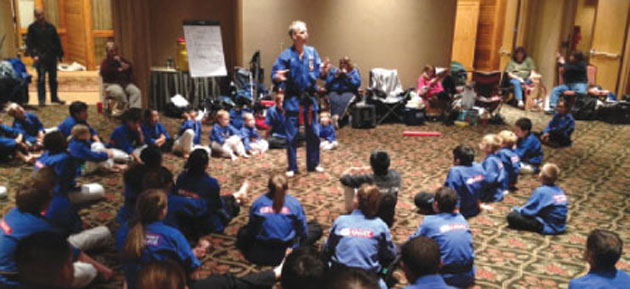
Stephen Oliver: You’re one of the highest ranked Parker Kenpo black belts in the world, give us a little bit of background of your training and how you got started with your school in Fresno California.
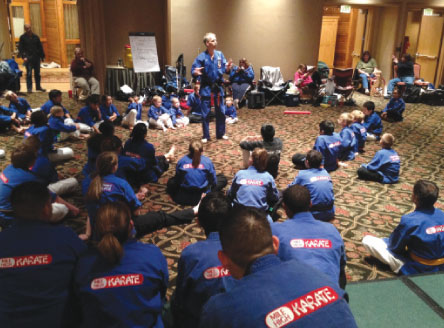
Sascha Williams: Well, I’m probably one of the last remaining active Ed Parker Black Belts. I actually started directly with Mr. Parker when he was still running a fulltime school. I trained with him until he died back in 1990, and started my schools in 1984 or so, and was teaching really just Parker’s Kenpo.
I started training in 1980. I first trained at Tracy’s Kenpo, which is sort of a slightly altered version of a Parker’s Kenpo. Then was fortunate enough to be able to study with Mr. Parker himself, and then got very involved down south with a couple of events, for example, the Long Beach Internationals, which is the same tournament that made Chuck Norris famous. It’s the same tournament that made Bruce Lee famous.
I was actually the official director of that tournament for about seven years in a row, and I was also the regional director for the International Kenpo Karate Association, which is Mr. Parker’s association. I was the regional director for five states, California being one of them. So I was quite involved in the national and international circuit.
I was a competitor for many years and went overseas quite a bit to train. I’ve also done a lot of support for the tournament circuits, especially once Mr. Parker died. A lot of the guys that were originally studying with Mr. Parker overseas no longer had anybody to help them.
So there were several high-ranking instructors, of which I was one of maybe 10, that were willing to travel around and continue to spread the art. That went on for a couple of years until about 1995 or 1996 when I got so tired of traveling all the time.
I had my first class in Salinas, California, in my own school, and from there, I moved over to Gilroy, and then kept on moving closer and closer to the desert; then finally in Los Banos, Madera, Turlock and Fresno. I ran four schools for a long time and then paired them down, learning that, actually, with your systems, that it was a little smarter to run one school well rather than four schools poorly.
I now have one school in Fresno, California, and I run it with my wife Rene and our adult children. Daniel is our oldest, who’s 22 years old, and we have Jennifer, who’s 19, and Randy, who is 18 years old now.
They’re all Black Belts, so we’re running it together as a team and have a couple of extra people that are kind of like family members now. I also have Ricky, who has been with me since he was 15 years old, and I have another, Jennifer Martinez, who is my son’s girlfriend, who is also 19 years old.
So, it’s actually a pretty cohesive group that’s all working very hard at making the school work. I used to, when I was coming up in the Parker system, do it as a one-man show. It was just me. Because I had four schools, imagine moving from school to school every day. So, each school was only open twice a week.
I also did very little marketing. It was much easier back then in the 90s. All I had to do was have a Yellow Page ad and every once in a while, do like a flyer run, and I didn’t charge much. It was pretty simple. A mom would come in and just enroll her child. I didn’t have long conversations with them or anything like that.
You know, they were paying 50, 60 bucks a month or so, but because my overhead was so low, I didn’t have any employees, and I didn’t have any advertising budget to speak of really. It was just rent. Because I wasn’t really wise enough to do what was important in this business, I was renting units that were not in the best part of town.
So it was really just teaching, without a lot of effort in the business aspect, and it went well for a while. It started drying out right around 2003, 2004, 2005. I started noticing that our market was changing and people weren’t just walking in nearly as frequently anymore.
Stephen Oliver: You’ve been a NAPMA member and then a Peak Performer member, and then have become a Mile High Karate franchise. I know our next step is now to start developing multi-units around you based on the Fresno and into Central and Southern California. If I recall correctly, when you came in to Mile High Karate, you were doing about $17,000 a month. Is that right?
Sascha Williams: That right. We’ve been a member of NAPMA pretty much since NAPMA started. I just liked the pretty pictures and everything for the ads because I do a lot of my own marketing materials, articles, newsletters and stuff like that. I’m comfortable doing that myself on the computer and here is such cool artwork so I figured, okay, I’ll join for at least the time it’ll save me creating all this stuff myself.
I didn’t see that much content yet that was useful for me, in part because I was ignorant, and the other part was because this stuff wasn’t as good yet back then. But I stayed with NAPMA and then used some of the stuff that they had to offer and then we started also going to the conventions.
The seminar was primarily about the perception of value and increasing tuition and I was able to relate to that very easily only because knowing the math of what the studio is about is extremely important. In other words, if you know that you have X amount of students and you make X amount of dollars in very student, you can very much predict how much money should be coming in and you can increase their perception of your value.
There’s only a couple ways to increase that in most people’s mind. In my mind, I was always focusing on “I’ve got to get more students”. I think that is a very common, instinctive way to think about this whole process.
I went through the same phase that most beginning studio owners go through. You’re thinking everything is fantastic because you’re increasing by 10 students a month but if your dropout rate is not under control, by the time you get to — with most schools, what I’ve seen, by the time you get to about 50 students, the dropout rate has just caught up with you.
In other words, they might enroll between six to eight students a month but they’re also losing between six to eight students a month, and that is when the math is working against you. So, obviously, your dropout rate is about the same as your enrollment rate.
You know, if I have 200 students, I can’t just enroll four. I’m going to be shrinking, right? I’m going to probably lose more than four students if I have 200. Not a lot of the schools have a two percent dropout rate and mine was pretty bad back then. I probably had about 8 to 10 percent dropout rate.
You don’t become aware of that until you start really looking at the numbers. That’s one thing that you are very good at, and just going to your seminars kind of helped me get involved in that more and more and more.
Then, I’m sure I’m not the only studio owner who felt quite a hit back in 2008, and that’s right about the time that I got interested in becoming a franchise of Mile High Karate.
Stephen Oliver: Why did that seem to you to be a solution?
Sascha Williams: Really, the reason why I became a Mile High Karate school was very basic, if you want to achieve what other people are able to achieve, do what they do. I was looking around. There were a few industry leaders that are very good, that have very, very successful schools. So lots of really good schools, but not a lot of them have a replicable system?
Stephen Oliver: So, systems were important to you?
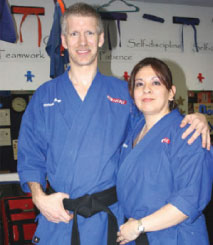
Sascha Williams: Yes. I met all these guys and I’d see them at the NAPMA conventions and elsewhere, but there’s a big difference between picking up an idea here and picking up an idea there, and having one “integrated system” that you can follow. What attracted me to the Mile High Karate franchise was that it was all laid out beginning to end. It was actually a lot simpler than what I thought.
I had a lot of misconceptions about it. You know, before I visited the Mile High Karate schools in Denver, I thought that these were going to be the most grandiose-looking Taj Mahal schools. I thought it must have been like these schools that have 500 students in them. When I went over there, the first thing I noticed was that the schools were about the same size as my school.
On average, like 2,000 and 3,000 square feet or so, and with classes about the same size as my classes, with a professional look, very clean and neat, but the impression was more like a classroom experience, rather than an elite health club look.
That was a real eye-opener for me. I could no longer believe that there was some significant “difference” in the market, or the locations for why I was not making as much money as the Mile High Karate schools were making.
Stephen Oliver: So, you previously thought that the physical location was the “key”?
Sascha Williams: It’s easy to say (and allow yourself to believe), that schools make more money because they put a million dollars in remodeling it and this looks super expensive when you walked in. But when a school makes three times or four times as much money as you do and that school looks very similar to yours, and has roughly the same amount of people in it, there must be something else that’s causing the difference. There must be something else that’s going on in that school that’s causing that school to make three or four times as much money.
Stephen Oliver: The goal is not to build a monument to your ego. The goal is to produce quality Black Belts, have a lot of new students coming in and keep as much as possible at the end of the day and have a strong net profit.
Sascha Williams: Yes. I can really relate to that, because this is kind of what I was alluding to earlier. It’s so easy to miss a sign of the real issue. It’s easier to tell yourself the reason I’m not more successful is because of A when it’s really B. I think that’s probably what almost everybody does.
You do it either consciously or subconsciously and a lot of times you use it as an excuse, but I was really looking for a better way for myself and Renee. We were looking for the answer to why are some people able to make more money than us . That’s our philosophy: if they can do it, we can do it. I don’t know if it was Tom Hopkins who first said this but, you know, never take advice from somebody who’s more screwed up than you are.
Stephen Oliver: Exactly.
Sascha Williams: That saying by itself, coupled with a little bit of logic, makes me want to pursue those people or follow those people who really are getting the right results. When I saw what the Mile High Karate schools were doing and I saw it was legit, that made it very easy to take that step and become a Mike High Karate school. I was excited about doing that. I was so excited about doing it because we’re now one of the most successful Mile High Karate schools around.
It wasn’t easy. It took a lot of work. My philosophy on becoming successful is that you have to change yourself to change your success rate and to change your school. A lot of people make the mistake of just wanting to hear the one thing that’s easy for them to implement and then they think that that’s going to be the solution.
Most of the time, the solution is you have to take a look at yourself again and take a look at your habits or you mindset, your belief system.
The prime example would be a lot of people just don’t think that they’re worth that much.
Stephen Oliver: What mindset did you have to challenge to make such a dramatic improvement in your school?
Sascha Williams: How many times do we hear somebody say teaching martial arts “shouldn’t be about money”? They think if I just charged $70 a month that should be good enough. I think that that’s almost always a subconscious response to either fear or low self-esteem.
In other words, people would love to be able to charge $150 or $200 or $300 a month and they would if they could but, they simply don’t feel that they are “worth” that much, and don’t know how to be worth that much. It’s very hard for anyone to admit that.
It’s easier to say that it’s because of the bad economy or it’s because of my area. I mean, heck, I’m the first one who could blow that horn. We’re living here in Fresno, California. We have a 17 percent unemployment rate. We have a median annual income of about $45,000.
That’s not a very good situation to have a high-producing school and would feel it every day. We have people who lose their jobs every day here. We have a lot of people who are just not in a very high income demographic at all; but yet we’re getting these numbers and we’re getting great results. Our programs start at $200 a month.
Stephen Oliver: There are lots of people who undervalue their services in our industry.
Sascha Williams: Yes, there are lots of people giving really bad advice in our industry. I heard a guy making a long case for why $120 is exactly the right amount to charge in his area. That tells me that he only knows how to charge $120, but he doesn’t know how to charge $140. If your belief is that “it’s not about money,” then why are you charging $120 instead of $80, $50 or $10? Why not free?
So we make that excuse. We always make that excuse, then we make the excuse, “I don’t want to just be a sales person,” without the true value of the martial art.
It’s really easy to think of a person who is charging more money than you are of being someone who somehow compromised their art, but in my experience, that’s almost always just an excuse for poor performance.
Heck, I have another Kenpo guy in town who’s doing it to me. He’s a little envious of me because I’m more successful than he is and I’m better known than he is. So, he’ll criticize me a lot. I see his guys every once in a while leaving like a review on Yahoo! saying how we are watering down the art, as though they would know that.
They’re not coming in and watching me teach. They have no clue. They’re simply judging by one false belief; they are charging more money, so they must be watering down the art.
It’s kind of part of all of us. There’s a fear — and I think there’s a fear with anybody — that if you go more into the business aspect of the art, that you are then compromising the art. But that’s the farthest thing from the truth.
As a matter of fact, this is the one thing that I learned from you that is probably more valuable than anything else, and that is that the true art lies in knowing how to convey the value of the art. I heard you say once that we don’t have a sales problem. We have a perspective problem.
If we could take a parent six years into the future and show them how their child’s life has changed and what they would see as a result of getting a Black Belt, they would not hesitate to pay us whatever amount we ask them, and that’s exactly true.
It is the way that we can communicate with the parents and it is the way that we can get them to set a goal for their Black Belt and be very excited about the whole idea of getting a Black Belt. That makes it possible for us to charge more and gives us the ability to surround ourselves with students who are highly appreciative of our program and who are highly committed to the program.
So, now you have a much lower dropout rate because these parents are totally in synch with you and believe in the long-term, significant benefits of this program. They’re totally committed to it. They will not sign their kid up for baseball if it gets in the way with the karate schedule, which is the exact opposite from the way I used to run a school. You know, making it easy for a parent right from the beginning.
Stephen Oliver: In the last 30 months California was perhaps the hardest hit state in the country with the recession but Fresno was the hardest hit city in the state of California. Is that accurate?
Sascha Williams: That’s pretty accurate. We still have a 17 percent unemployment rate as it is right now. Not a week goes by without one of my students’ parents losing a job.
Stephen Oliver: So in that period of time you’ve had a 300 percent on average increase in your revenue since becoming part of Mile High Karate, Is that right?
Sascha Williams: That sounds about right.
Stephen Oliver: One of the things that you’ve learned to be very good at is flooding the school with intro traffic. You’ve had several months since last spring where you’ve had 150 to 300 intros in a single month.
Sascha Williams: Yes, that’s right. Last month, it was over 250, and it’s always usually over 150 intros.
Stephen Oliver: Most of this intro activity is coming from low cost grassroots community outreach marketing, is that right?
Sascha Williams: That’s correct. There’s almost no regular paid advertisement. We’re doing lots of community events and activities. Things like local home shows, community carnivals, elementary school festivals, day cares, youth groups, Kiwanis clubs, scout activities and others.
We’re constantly tweaking and adjusting our lead generation strategies. Being part of Mile High Karate gave all of us, as members of a big team, the strength from just the constant communication. Like when the Karate Kid movie came out, that was a blast, because all of us were working together and comparing figures.
During the weekends and we were actually texting back and forth. How many appointments did you set? How many did you get? It drives you. You’re just in a better group that way and that made it motivating.